Marketing
User-Generated Content (UGC) for Ecommerce: A Practical Guide to Selling More
A practical guide to user-generated content (UGC) for ecommerce: what it is, why it converts, how to source it from customers and creators, where to use it, and rights.
Tamm Team6 min read

User-generated content (UGC) for ecommerce is any photo, video, or review about your product made by a real customer or a creator you partner with, not your marketing team. It outsells polished advertising because it is social proof: a buyer believes the experience of someone like them. To use it, collect it from customers with a post-purchase request, a hashtag, and incentives, and from creators with a clear brief, then use it on product pages, in ads, and on your social accounts after getting explicit permission. This guide explains what UGC is and why it lifts conversion, how to source and use it, the basics of rights and consent, and the angle for the Saudi market specifically.
What user-generated content is
UGC is content about your brand made by people outside your team. It takes several forms, and all of them are useful:
- Customer photos and videos: the product shot after it arrives, the unboxing clip, the try-on.
- Ratings and reviews: a short text or stars under the product, the simplest form of UGC and one of the most persuasive.
- Creator content: styled clips you commission from a creator in their own voice, so it reads as authentic rather than as an ad.
What they share is that the source is a real user, not the brand's management. That is what gives UGC credibility you cannot buy with a big production budget.
Why UGC outsells polished ads
Buyers now recognize a polished ad shot and treat it with caution. A photo of the product on a real body or in a real home says something different: "a person like me bought this and liked it." That is the power of social proof, and it is the strongest driver of trust in online buying.
UGC answers the exact anxiety that stops a purchase: how does the size actually look? Is the color like the photo? Is the quality worth it? Seeing the product through other users' eyes answers these before the visitor even asks. UGC also breaks the monotony of perfect studio shots, making your store feel alive rather than a stiff catalog. The practical result: product pages that show real user content convert their visitors into buyers at a higher rate.
How to collect UGC from customers
The best source of content is someone who actually bought from you. But they usually will not film on their own, so your job is to ask, make it easy, and reward.
Ask after purchase
The golden moment is when the order arrives. Send a short message after delivery that thanks the customer and asks them to share a photo or their opinion. Make the ask specific and easy: a direct link to write a review, or an invitation to tag you in a photo. The less effort you ask for, the more people respond.
Create a hashtag and reward sharing
Dedicate a branded hashtag that gathers your customers' content in one place, easy to browse and to request rights from. Reward sharing fairly: a coupon on the next order, or a chance to be reposted, which gives the customer exposure. Incentives raise volume, but authenticity stays the condition, so ask for a genuine experience, not paid praise. How you present the product also encourages people to shoot it, so read product photography tips to make your product beautiful enough to be worth filming.
How to work with creators
When you want a volume or a quality that customers will not produce spontaneously, work with a creator who makes UGC in their own style. Write a clear brief that sets: one core message, the product's selling points, what must be mentioned, and the type of deliverables (how many clips, what length, for which platform). Leave the style to the creator so the content stays authentic rather than a stiff ad.
Creators are ideal partners because they are good at storytelling and hold their audience's trust, and selling merch for content creators goes deeper into that partnership. And if your goal is reaching a creator's audience rather than just their content, that is the domain of influencer marketing, which is close to UGC but not the same thing.
Where to use UGC so it sells
Collecting the content is half the work. The other half is placing it where the decision is made.
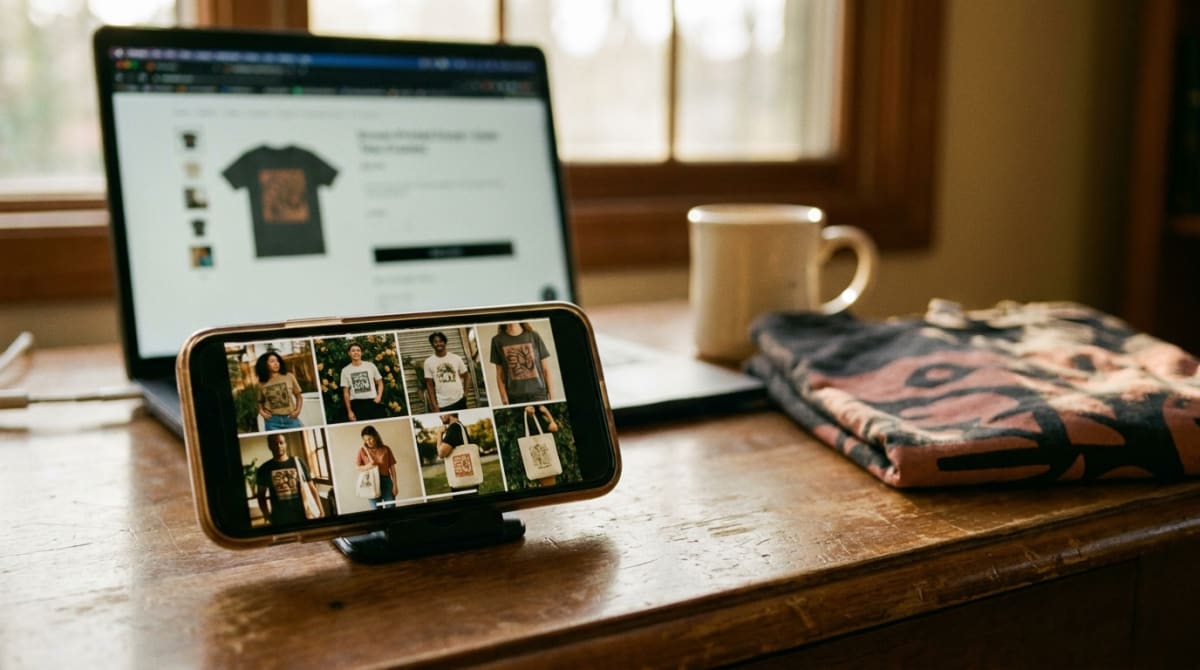
- Product pages: the strongest spot. Show customer photos and reviews near the buy button, where they answer the buyer's questions in the moment of hesitation.
- Paid ads: UGC clips often beat polished ads on short-video platforms, because they look like ordinary content the viewer does not skip.
- Your social accounts: reposting customer content builds community and encourages others to share.
- Email and post-purchase messages: a review or a photo reassures people who have not bought yet.
The rule: put the social proof at the point of decision, not on an isolated page few people visit. For more on improving decision points in your store, read conversion rate optimization.
Rights and permission: do not assume consent
A customer tagging you does not mean they gave you permission to use their photo on your store or in ads. Before any repost, ask for explicit consent with a short message that states where you will use the content: the product page, a paid ad, or your account. This protects you legally and respects the customer, who is often happy that you picked their content.
Keep permissions in writing, and credit the content's owner where it fits. With paid creators, agree in writing on usage rights: where, for how long, and whether it includes paid ads. Clarity from the start prevents a later dispute and builds a relationship that repeats.
The Saudi market angle
Saudi Arabia is among the world's heaviest consumers of short video, and its audience trusts a personal recommendation more than a formal ad. That makes UGC especially effective: local content in Saudi dialect and context speaks to the buyer in their own language and shortens the distance to purchase.
One local nuance deserves attention: privacy matters, and many customers will share the product without showing their face or details of their home. Respect that and accept content on the owner's terms, without pushing for more exposure. The product on a table, an unboxing shot, or a try-on with a limited frame are all strong UGC that respect the owner's privacy. And when you ask for permission, be clear and respectful, because trust is the capital that brings the customer back and brings their content with them.
Conclusion
User-generated content (UGC) for ecommerce sells more because it is honest social proof: the buyer believes the experience of someone like them. Collect it from customers with a post-purchase request, a hashtag, and fair incentives, and from creators with a clear brief, then place it where the buyer decides: product pages, ads, and your accounts. Never assume permission; ask for it explicitly and keep it in writing. In the Saudi market, respect privacy and accept content on the owner's terms. And the piece your customer photographs can be one you designed yourself: Tamm turns that design into the product that reaches their hands, made after the sale and sent out under your name.
Frequently asked questions
- What is user-generated content (UGC)?
- It is any content about your product made by people other than you: your customers' photos and videos, their written reviews, and clips from creators you partner with. What defines it is that it comes from a real user, not the brand's marketing team, which makes it feel more honest and sell more.
- Why does UGC increase conversion?
- Because it is social proof. A buyer trusts the experience of someone like them more than a polished ad shot, so seeing the product on real bodies and in real homes removes doubt and shortens the distance from browsing to buying.
- How do I collect content from my customers?
- Ask for it after purchase with a short message, create a branded hashtag, and reward sharing with a coupon or a repost. Make the path as easy as possible, because the less effort you ask for, the more people share.
- Am I allowed to repost a customer's photo on my store?
- Do not assume permission. Ask for explicit consent before using any photo on your store or in ads, even if the customer tagged you. A short message asking permission and stating where you will use the content is enough and protects you.
- What is the difference between UGC and influencer marketing?
- An influencer sells you access to their audience, while UGC sells you credibility you use in your own channels. Much creator content works for both, but UGC is broader because it also includes your everyday customers.