Marketing
How to Market Your Online Store in Saudi Arabia: Channels, Content, and Measurement
How to market your online store in Saudi Arabia: channels that work, Snapchat, TikTok, Instagram, influencers, paid ads, and retargeting with tracking pixels.
Tamm Team5 min read
To market your online store in Saudi Arabia successfully, focus on the channels your audience actually uses: Snapchat, TikTok, and Instagram for awareness, influencers for trust, and paid ads for precise reach, then retargeting with tracking pixels to win back people who visited but did not buy. You do not need to be everywhere. You need to be present where your customers spend their time, with content worth stopping for. This guide covers the channels that work locally, content ideas that actually sell, how to build an audience before launch, and how to measure every riyal you spend so you know what to scale and what to stop.
Build an audience before you open the doors
The best launch day starts with an audience already waiting. Weeks before you list your first product, start one account and post useful content around what you will sell: the making of a design, the story of the brand, a problem you solve. This builds warm followers and a waitlist that converts to first-day sales instead of starting from zero. If you are still setting up the basics, work through how to open an online store in Saudi Arabia alongside building your audience. Launching to a small engaged crowd beats launching a perfect store into silence.
The channels that work in Saudi Arabia
Saudi Arabia is one of the world's top markets for social and short-form video use. Do not spread yourself across all of them. Pick one or two that fit your product and audience, master them, then expand.
1. Snapchat
Snapchat has strong reach across wide age groups in Saudi Arabia. It suits close, spontaneous daily content, and its ad tools allow precise local targeting. Use it to show the product in real context and to run quick, time-bound offers.
2. TikTok
TikTok is a powerful discovery engine: one good short video can reach thousands with no existing following. Show the product in use, and make how-to or playful clips around your category. Authenticity beats polished production here.
3. Instagram
Instagram is your brand's visual storefront: photos, reels, stories, and saves for later. It suits fashion and products bought with the eye. Keep your grid consistent, and use stories for offers and direct interaction.
4. X (Twitter)
X is where conversation, news, and live moments happen in Saudi Arabia. It suits building a voice, replying to customers in public, and riding trending moments smartly. It is rarely a direct-sales channel, but it is excellent for trust and presence.
5. Influencers
The right influencer buys you trust that ads struggle to. Choose someone who genuinely speaks to your audience over the one with the most followers, and agree on honest content showing the product in their hands. Smaller niche influencers often convert higher at lower cost.
6. Paid ads
Paid ads buy you precise, fast reach. Start small, test several messages and audiences, and watch cost per click and cost per order. Kill what loses, scale what wins. But advertising without measurement is spending blind, which is where the pixel comes in.

Content ideas that actually sell
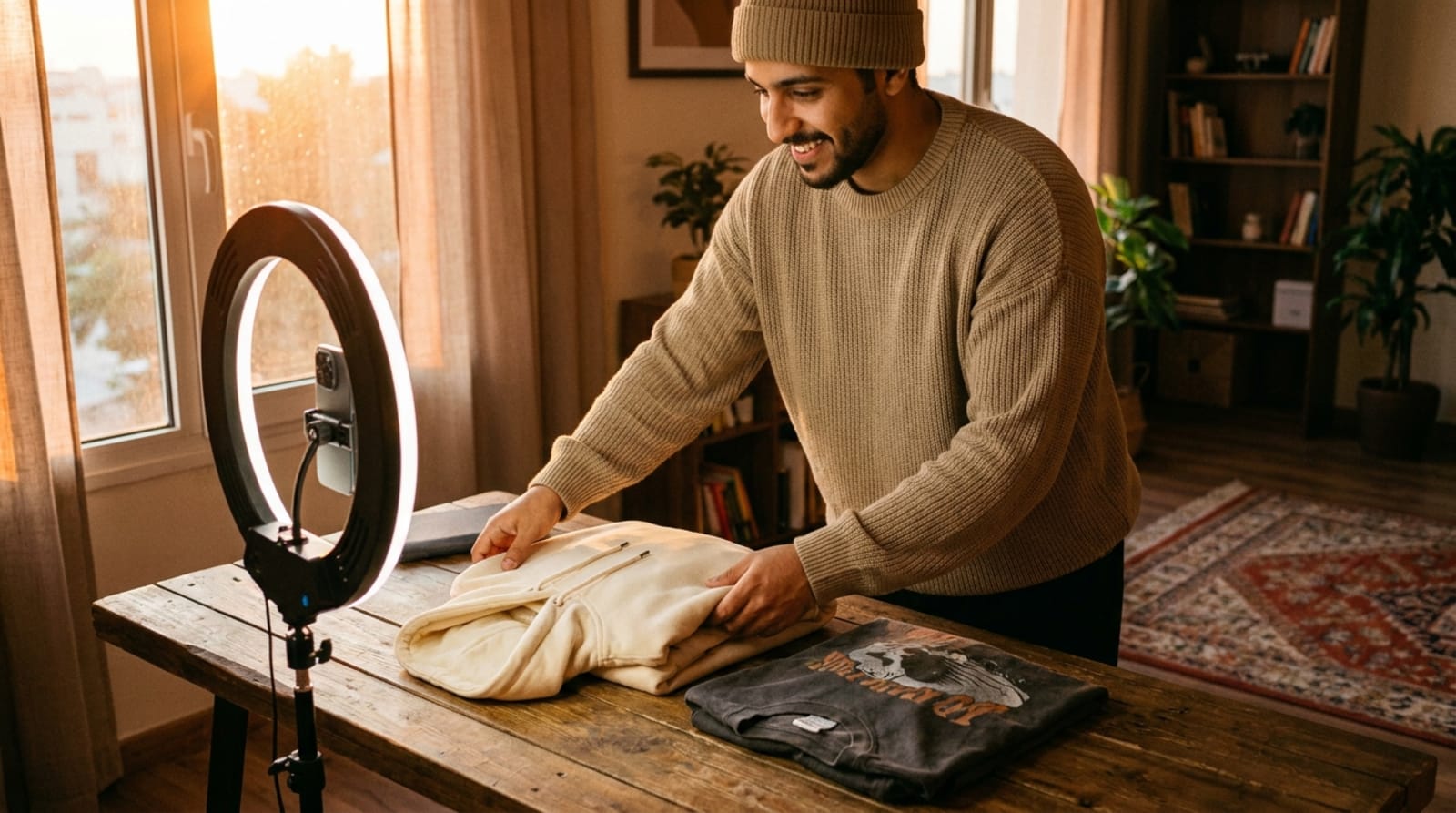
Content that sells does not shout "buy." It helps, entertains, or builds trust. Try: the making or printing of the product, a before-and-after clip, a real customer's take, an answer to a common question in your category, the product in daily use, and the story of why you launched the brand. If you sell your designs through print on demand, the design and print process is rich content on its own. Content creators in particular hold a storytelling advantage worth using, see selling merch for content creators. Post consistently, and repeat what works.
Where Tamm fits
Tamm is the factory and the warehouse behind your store. You sell on Salla, Zid or Shopify, or any platform through the API; we print your designs on demand, store your stock, and pack and ship every order under your name from inside Saudi Arabia, then send the tracking number back to your store. Read about print on demand and storage and shipping.
Email and SMS: the channel you own
A follower can vanish with an algorithm change, but email and phone numbers are a channel you own and reach directly. Collect email and mobile with customer consent at checkout or in exchange for an offer, then use them smartly: abandoned-cart reminders, product launches, limited offers, and a thank-you after each order. SMS has very high open rates locally, so save it for the moments that matter to avoid becoming noise. The rule: every message gives value, not just asks for it.
Measuring results: do not grow what you do not measure
Marketing without measurement is guessing. Pick a few numbers and track them weekly: cost per click, conversion rate, customer acquisition cost, and average order value. The pixel ties every sale to the ad that drove it, so you know where money goes with confidence. Do not judge an ad on one day. Give it enough data, then decide. Kill what consistently loses, scale what wins, and reinvest profit into the channels that have proven themselves. Measurement is what turns marketing from a gamble into a system you can scale.
The bottom line
Marketing your online store in Saudi Arabia starts with an audience you build before launch, then a focused presence on the channels your customers use: Snapchat, TikTok, and Instagram, with influencers for trust and paid ads for precise reach. Feed that with content that helps and builds a relationship, and close the loop with retargeting through tracking pixels, plus email and SMS as the channel you own. Above all, measure your results weekly so you know what to scale and what to stop. And when all of that works and the orders start coming in, Tamm carries them the rest of the way: each order is made and sent from Saudi Arabia in your brand's name, so growth stays a marketing problem and never turns into a packing one.
Frequently asked questions
- What is the best channel to market an online store in Saudi Arabia?
- There is no single best channel for everyone. Snapchat, TikTok, and Instagram cover most local shoppers, and the right one is simply where your audience spends time. Start with one channel, master it, then expand.
- How much budget do I need to start with paid ads?
- You can start with a small daily budget to test ads and measure cost per click and cost per order. What matters is not the budget size but having a tracking pixel installed before you spend, so you know which ad actually drives sales.
- What is a tracking pixel and why does it matter for my store?
- A tracking pixel is a small piece of code that records visits to your store and events like viewing a product or adding it to cart. It lets you measure ad results precisely and retarget people who visited but did not buy.
- Should I build an audience before I launch the store?
- Yes, whenever possible. Posting useful content before launch builds a waitlist and warm followers, so your store opens with first sales instead of starting from zero. Even a few weeks of content makes a difference on launch day.
- Is email and SMS marketing still effective?
- Yes. Email and SMS reach customers who opted in directly, at low cost and relatively high return. Use them for abandoned-cart reminders, offers, and product launches, not for repeated spam.