Storage and shipping
What Is Fulfillment (3PL)? A Practical Guide for Sellers
Fulfillment, or third-party logistics (3PL), stores your goods and picks, packs, and ships your orders for you. Here is how it works and when you need it.
Tamm Team4 min read

Fulfillment, or third-party logistics (3PL), is a service where an outside specialist receives and stores your goods, then picks, packs, and ships every order and handles returns on your behalf. In short: you sell, they pack and ship. Instead of keeping boxes in your room and spending every evening packing orders and running to the courier, your stock enters an equipped warehouse and each order leaves it ready under your brand. This frees you from repetitive manual work and makes shipping faster and more consistent as your store grows. In this guide we explain how the service works step by step, how it differs from plain warehousing, and when it is time to outsource.
The fulfillment flow: pick, pack, ship
The heart of the service is a three-step cycle that repeats with every order:
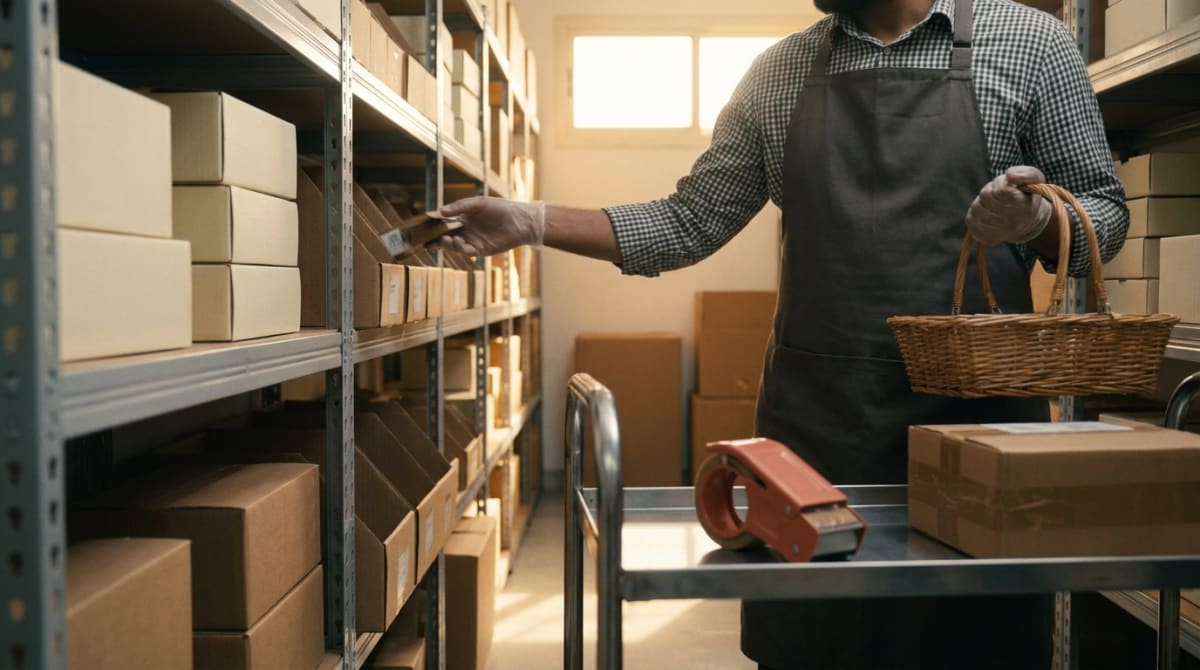
- Pick: when an order comes in, a worker goes to the product's shelf location and pulls the right items, sizes, and quantities.
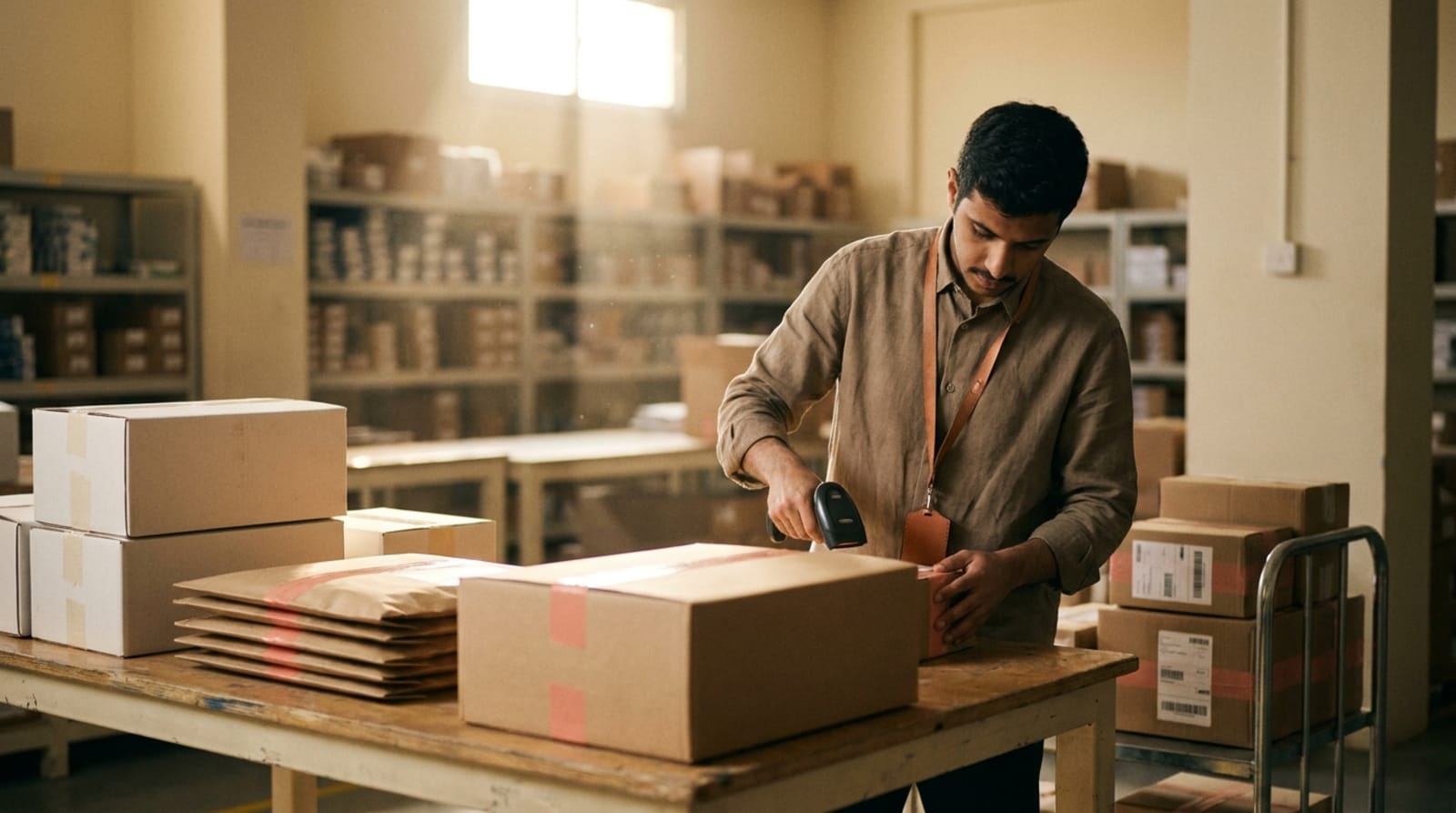
- Pack: the items are checked, packed safely, and labeled with the shipping label and invoice, with optional branded packaging.
- Ship: the order is handed to the courier, and the customer gets a tracking number that follows the parcel to the door.
The advantage is that this cycle runs with the same accuracy whether you have five orders a day or five hundred. The system carries the load, not you.
Receiving and warehousing: where it starts
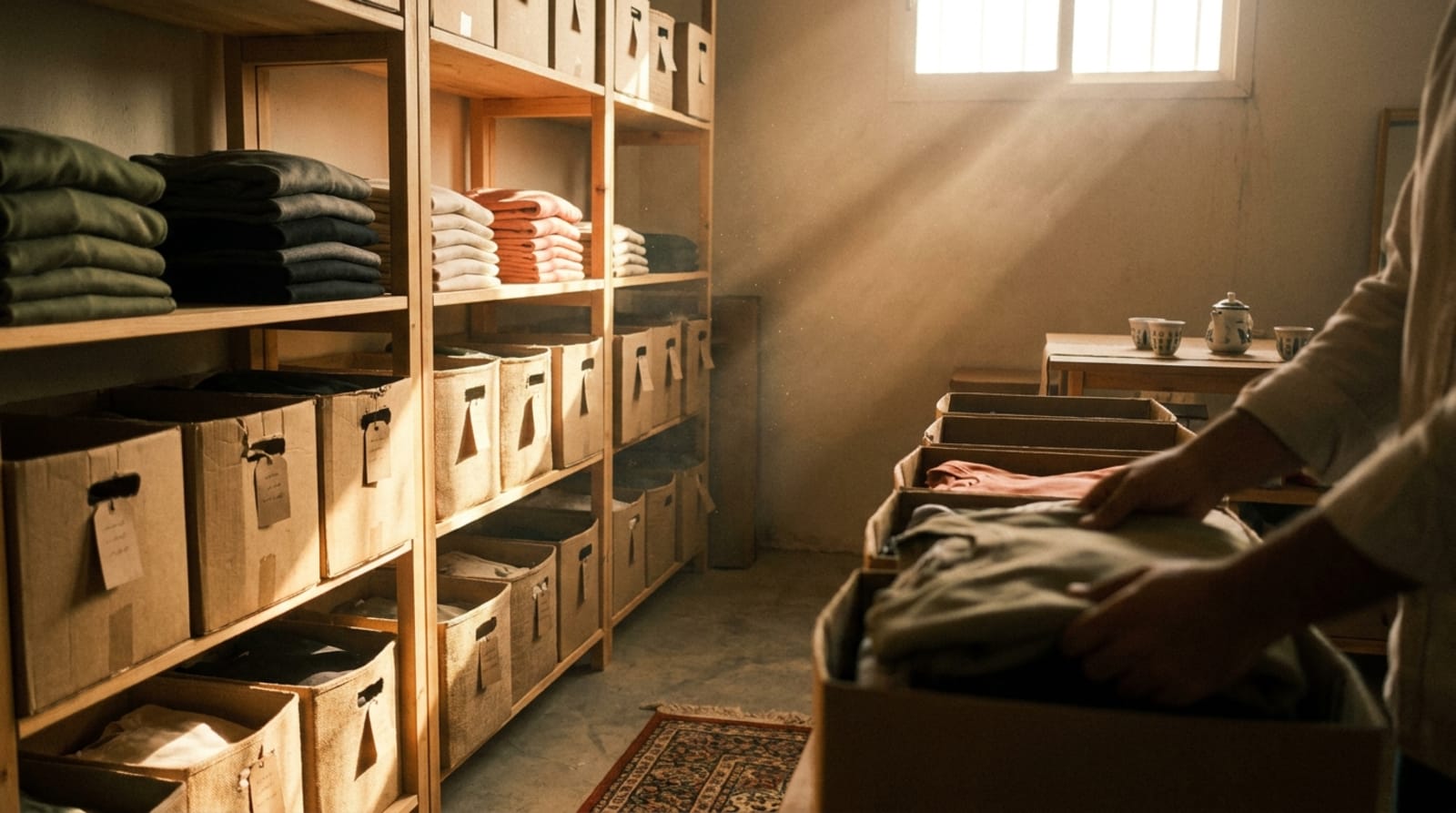
Before any order goes out, your goods come in. This is receiving: items are counted, checked against your list, logged into the system, and assigned to specific shelf locations. Organized storage is not just stacking. Every product has a known location, and every unit is counted in real-time inventory. That is what makes picking later fast and accurate, and prevents you from selling a product that has actually run out. When your stock is orderly and counted, everything after it gets easier.
Handling returns
Returns are part of commerce, not an exception to it. A good fulfillment service runs the reverse side too: it receives the returned item, inspects its condition, and decides whether it goes back into sellable stock or is set aside. This spares you the manual handling of every return and keeps your inventory accurate. Organized returns protect the customer experience and your numbers at the same time.
Fulfillment vs plain warehousing
Many people confuse the two, and the difference is fundamental. Plain warehousing keeps your goods on a shelf for a fee, and its job ends at storage. Fulfillment stores, then operates: it picks, packs, and ships every order and handles the return.
| Aspect | Plain warehousing | Fulfillment (3PL) |
|---|---|---|
| Storing goods | Yes | Yes |
| Picking and packing orders | No | Yes |
| Shipping and tracking | No | Yes |
| Managing returns | No | Yes |
| Store integration and inventory sync | Rarely | Yes |
In short: a warehouse is static space, fulfillment is a moving operation that carries an order from shelf to the customer's door.
When should you outsource logistics?
There is no single moment that fits everyone, but there are clear signals:
- Packing orders is stealing time from marketing and product work.
- Your space is full of boxes, or manual shipping is delaying customers.
- Your orders swing seasonally, and you need flexibility without permanent hires.
- You want faster shipping and a more professional experience without building a full internal operation.
The simple rule: when logistics becomes a burden growing faster than your capacity, a specialist gives you your time back and keeps your promises to the customer. See also importing from China to Saudi Arabia and how it intersects with the storage decision.
Where Tamm fits
Tamm is the factory and the warehouse behind your store. You sell on Salla, Zid or Shopify, or any platform through the API; we print your designs on demand, store your stock, and pack and ship every order under your name from inside Saudi Arabia, then send the tracking number back to your store. Read about print on demand and storage and shipping.
The bottom line
Fulfillment, or third-party logistics (3PL), is a service where a specialist receives and stores your goods and picks, packs, ships, and manages the return of every order on your behalf. It differs from plain warehousing in that it does not just store, it operates the order from shelf to door. The right time comes when your store grows and manual packing becomes a burden that delays your customers and steals your time. When you hand logistics to a specialist close to your customer, shipping gets faster, inventory gets more accurate, your experience gets more professional, and you get back to what matters: the product and the customer.
Frequently asked questions
- What is the difference between fulfillment (3PL) and plain warehousing?
- Warehousing keeps your goods on a shelf and stops there. Fulfillment stores them, then picks, packs, and ships every order and handles returns. One is static storage, the other is a full order operation.
- What does 3PL stand for?
- 3PL stands for third-party logistics. It means an outside specialist stores your goods and picks, packs, and ships your orders for you, instead of you running the operation yourself.
- When should I outsource logistics to a fulfillment provider?
- When order volume starts eating your time, shipping drags and frustrates customers, or you need proper storage and packing. If fulfillment is stealing time from product and marketing, it is time to outsource.
- Do I lose control of my brand if I outsource?
- No. You still own the store and the customer relationship. The provider picks and ships under your name and can use your branded packaging. You set the product, price, and experience, they run the operation.