Storage and shipping
Self-Shipping vs a 3PL: When to Outsource Your Logistics
Self-shipping vs using a 3PL: when packing orders yourself pays off, and when outsourcing logistics to a third party is cheaper for your time, cost, and growth.
Tamm Team5 min read

Self-shipping vs using a 3PL comes down to your volume and your time more than anything else. The short rule: pack orders yourself while the count is small and you can keep up, and outsource to a specialist third party once volume grows and manual packing becomes a burden that delays customers and steals time from marketing and product. Self-shipping means you store your stock, pick and pack every order, and stand in the courier line yourself. It is cheaper on the surface and closest to the customer experience. A 3PL (third-party logistics) is a company that takes all of that off your hands, usually at a better rate and speed once volume is high. There is no single answer that fits everyone, only a tipping point that differs per store. This guide compares cost, time, control, speed, and scalability, and gives you a practical decision checklist.
What are we actually comparing?
The difference is not who sticks the shipping label on, it is who carries the whole operation. With self-shipping you are the warehouse, the picker, and the returns desk, and the cost is hidden in your time and your space. With a 3PL you pay a clear invoice so someone else carries the load, and you get pooled shipping rates and steady speed. The real question is where your hours go. If they go into packing, you are funding growth with your own time. If they go into product and customers, it may be time to outsource logistics.
Self-shipping: full control and its ceiling
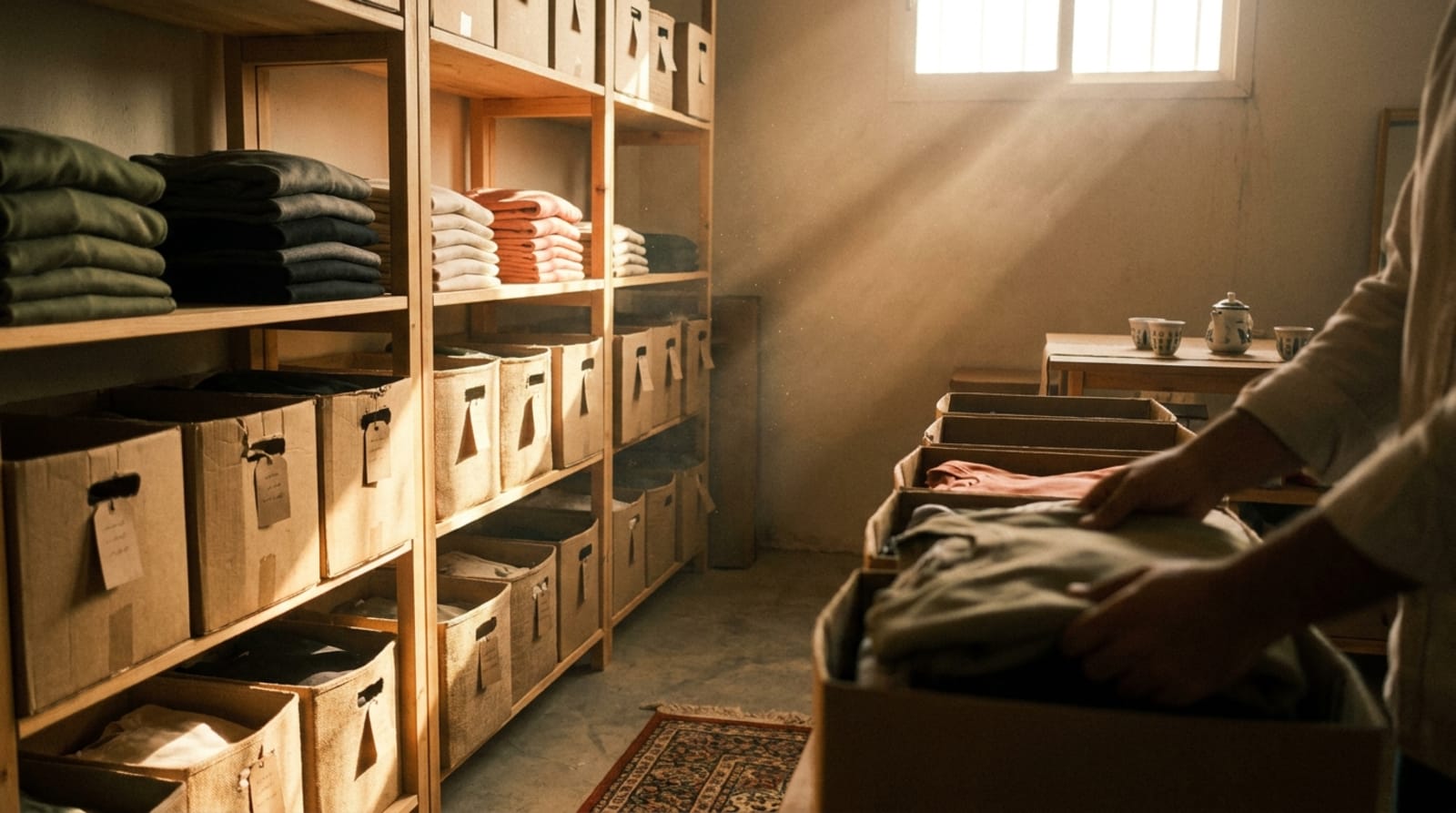
Self-shipping gives you the closest possible contact with every order. You choose the packaging, add a handwritten thank-you card, and fix any mistake on the spot. It is ideal at the start: few orders, one or two products, and a tight budget that cannot absorb an outside invoice. But control has a ceiling. Every extra order eats the same slice of your time, so the operation does not improve with volume, it strains under it. You pay retail shipping rates, boxes pile up in your space, and any day you are sick or traveling, shipping stops. Full control is great while volume stays small.
A 3PL: speed and scale for a fee
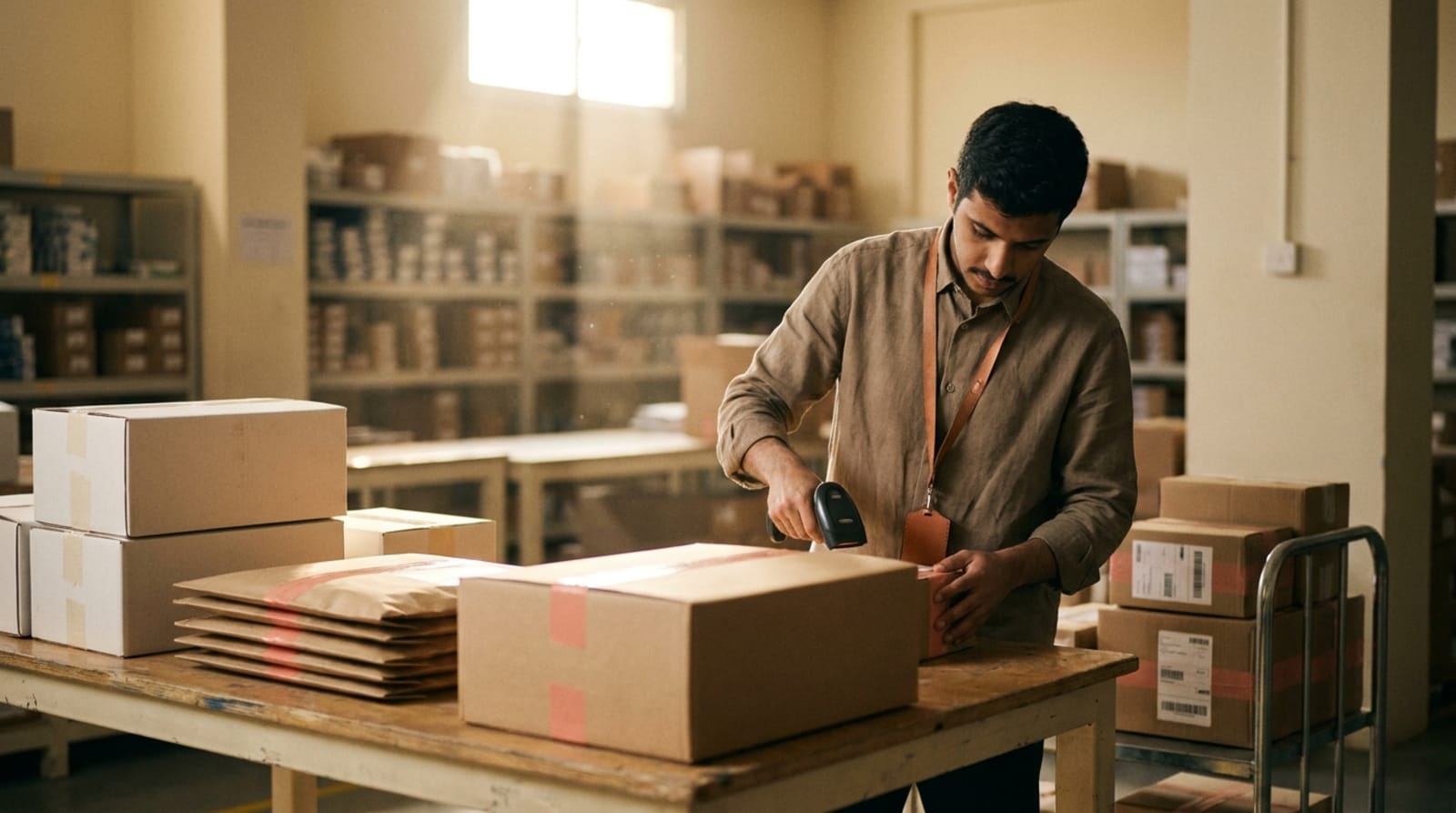
A 3PL flips the equation. You pay for storage, packing, and shipping, so your hours are freed and shipping gets faster and more consistent. The biggest advantage is that it does not strain under volume, it eases: the same accuracy with 5 orders or 500, and better shipping rates because it pools its clients' volume. The trade-off is a monthly invoice and some distance from the direct hands-on touch. You will not pack every order by hand, but you gain time to pour into what actually grows the store. The decision improves when you count it in your time, not the invoice alone.
The comparison across five dimensions
| Dimension | Self-shipping | 3PL |
|---|---|---|
| Cost | No outside invoice, but costs your time, space, and errors | Clear invoice, plus cheaper pooled shipping rates |
| Time | Every order takes a fixed slice of your hours | Your hours are almost fully freed |
| Control | Direct and complete over every detail | You keep ownership, less hands-on touch |
| Speed | Depends on your daily capacity | Steady and consistent at any volume |
| Scalability | Strains with each extra order | Eases and absorbs seasonal spikes |
The table sums up the trade-off: self-shipping wins on closeness and surface cost at small volume, and a 3PL wins on time, speed, and scale once volume is high.

Decision checklist: when to outsource
There is no magic number, but these are clear signals that the time to outsource is near:
- You have crossed a few hundred orders a month, and the count is rising.
- Packing is stealing hours from marketing and product work.
- Your space is full of boxes, or manual shipping is delaying customers.
- You pay retail shipping rates higher than what aggregators get.
- Your orders swing seasonally and you need flexibility without permanent hires.
- Fulfillment errors are starting to repeat under pressure.
You do not have to make a hard choice. A hybrid is common: pack special or limited products yourself, and hand high-volume or repeat orders to a 3PL. That keeps control where it matters and gains scale where you need it.
Where Tamm fits
Tamm is the factory and the warehouse behind your store. You sell on Salla, Zid or Shopify, or any platform through the API; we print your designs on demand, store your stock, and pack and ship every order under your name from inside Saudi Arabia, then send the tracking number back to your store. Read about print on demand and storage and shipping.
The bottom line
Self-shipping vs a 3PL is not a fight between better and worse, it is a question of timing. Pack orders yourself while volume is small and your time can absorb it, since closeness and surface cost are on your side. Once you cross a few hundred orders a month and packing becomes a burden that delays your customers, outsourcing to a specialist is cheaper for your time and faster for your customer. Count the decision in your hours, not the invoice alone, start with what fits your size today, then switch when the signals change. What matters most is keeping logistics in service of your growth, not a burden that outgrows you.
Frequently asked questions
- What is the difference between self-shipping and a 3PL?
- Self-shipping means you store your goods and pick, pack, and hand every order to the courier yourself. A 3PL is a specialist company that does all of that for you, from storage to shipping and returns.
- When does outsourcing to a 3PL become cheaper than self-shipping?
- Usually once you cross a few hundred orders a month, or when manual packing starts stealing time from marketing and product, or when shipping delays your customers. It is a signal more than a fixed number.
- Is self-shipping always cheaper?
- No. It looks cheaper because there is no outside invoice, but it costs you your time, space, errors, and retail shipping rates. A 3PL pools volume and often gets better shipping rates.
- Do I lose control of the customer experience with a 3PL?
- You keep ownership. You still own the store and the customer relationship, and a 3PL can pack orders in your branded packaging. You only give up the direct hands-on touch in exchange for speed and consistency.
- Can I combine both approaches?
- Yes, and many do. A common hybrid is to pack special or limited products yourself and hand high-volume or repeat orders to a 3PL. It balances control with the ability to scale.