Print on demand
What Is DTF Printing? A Direct-to-Film Guide for Saudi Sellers
DTF printing prints your design on film, then heat-transfers it onto any fabric and color. Here is how it works and when it beats DTG and screen printing.
Tamm Team4 min read
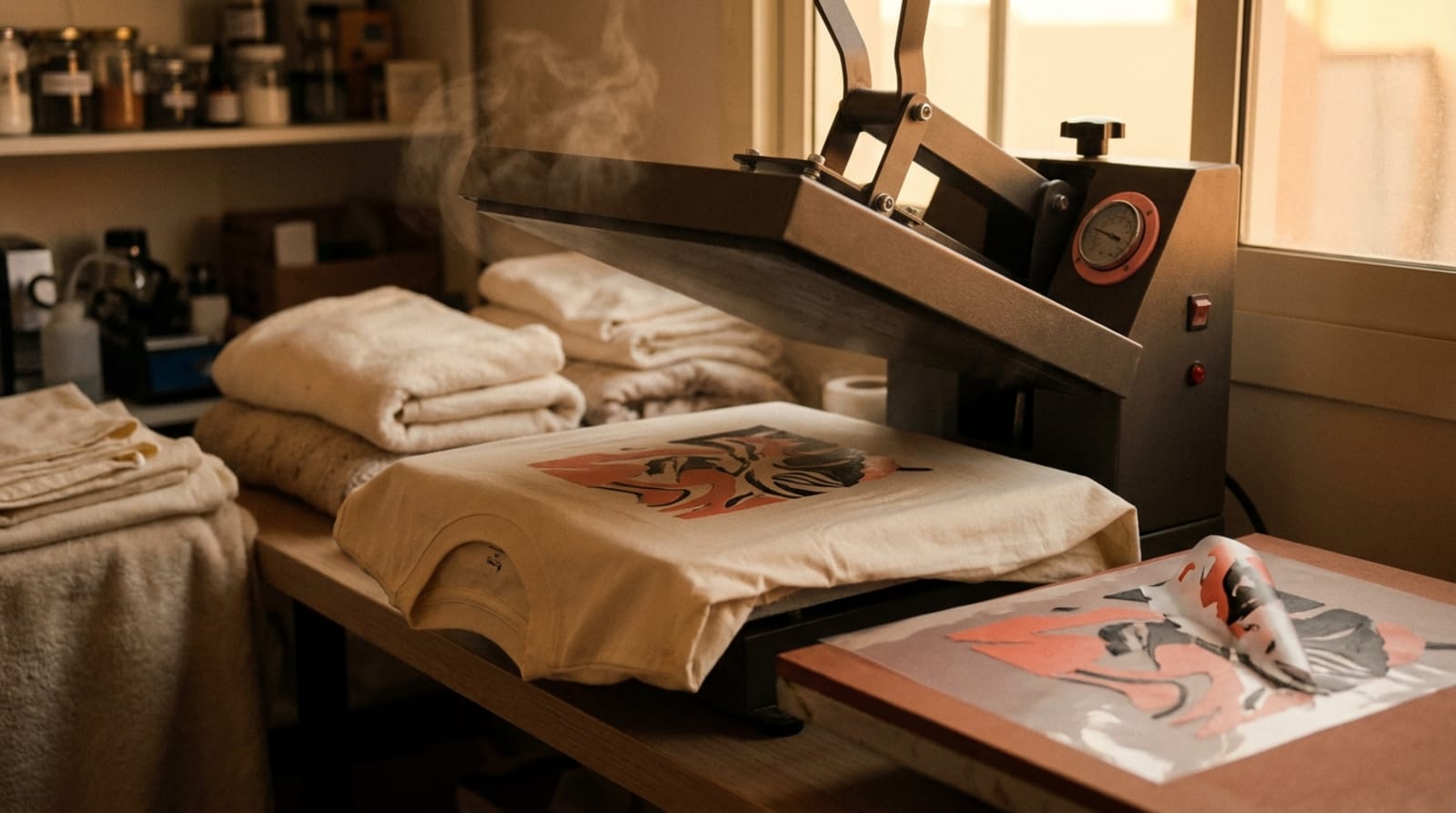
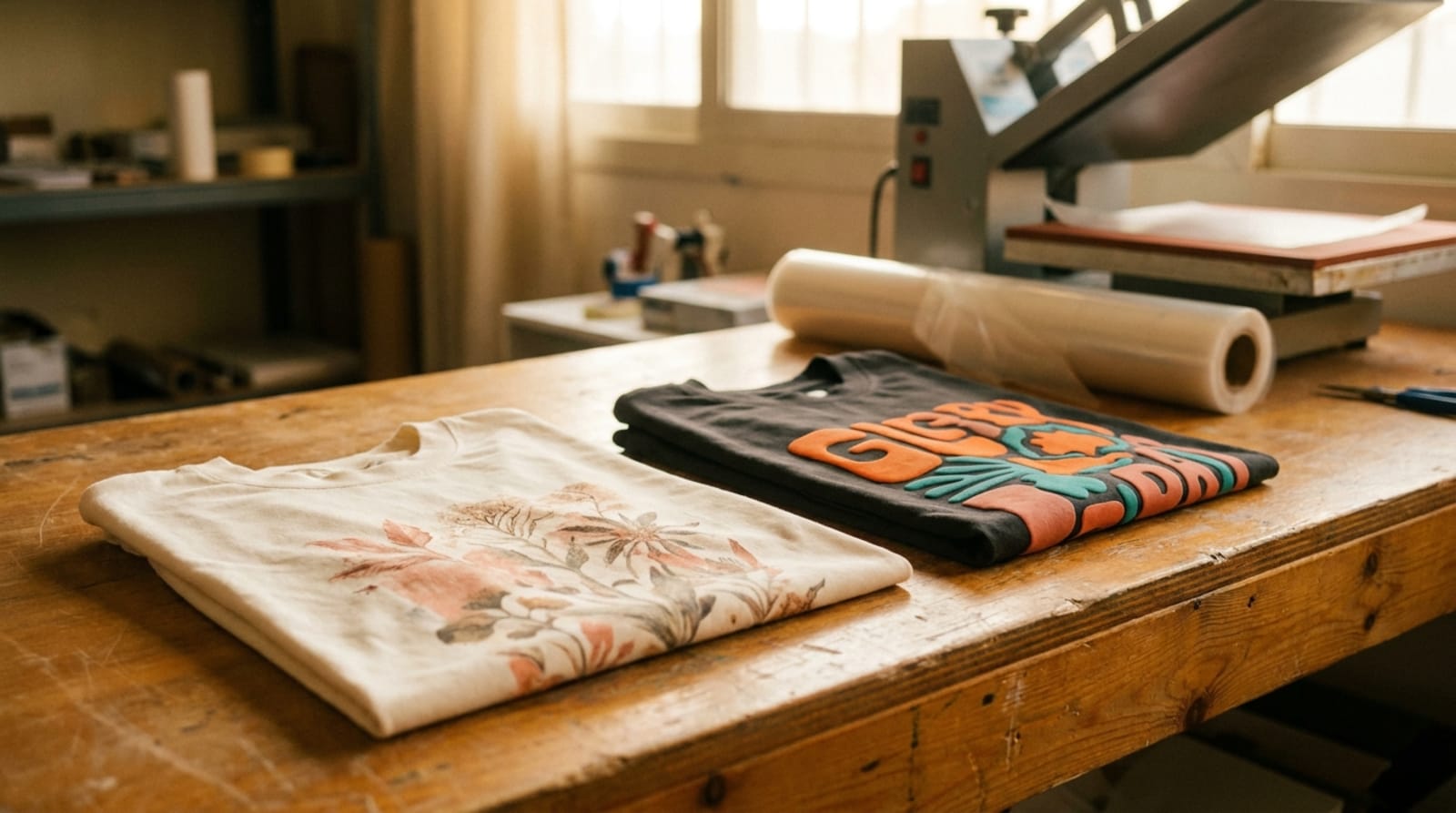
DTF printing, short for Direct to Film, is a method where your design is printed onto a clear plastic film, coated with an adhesive powder, and then heat-transferred onto fabric. What sets it apart is that it works on almost any fabric and any color, from cotton to polyester and from white to black, with sharp colors and a durable layer that holds up to washing. That is why it has become a favorite for apparel sellers who want high-quality prints in small quantities without committing to screen-printing setups.
How DTF printing works, step by step
The idea is simpler than the name suggests. It runs through five stages:
- The design is printed in reverse onto a clear PET film with special ink, with a white layer underneath so colors show on dark fabric.
- A hot-melt adhesive powder is applied to the wet ink, sticking only to the printed areas.
- The film is dried and the powder is melted slightly into a solid adhesive layer.
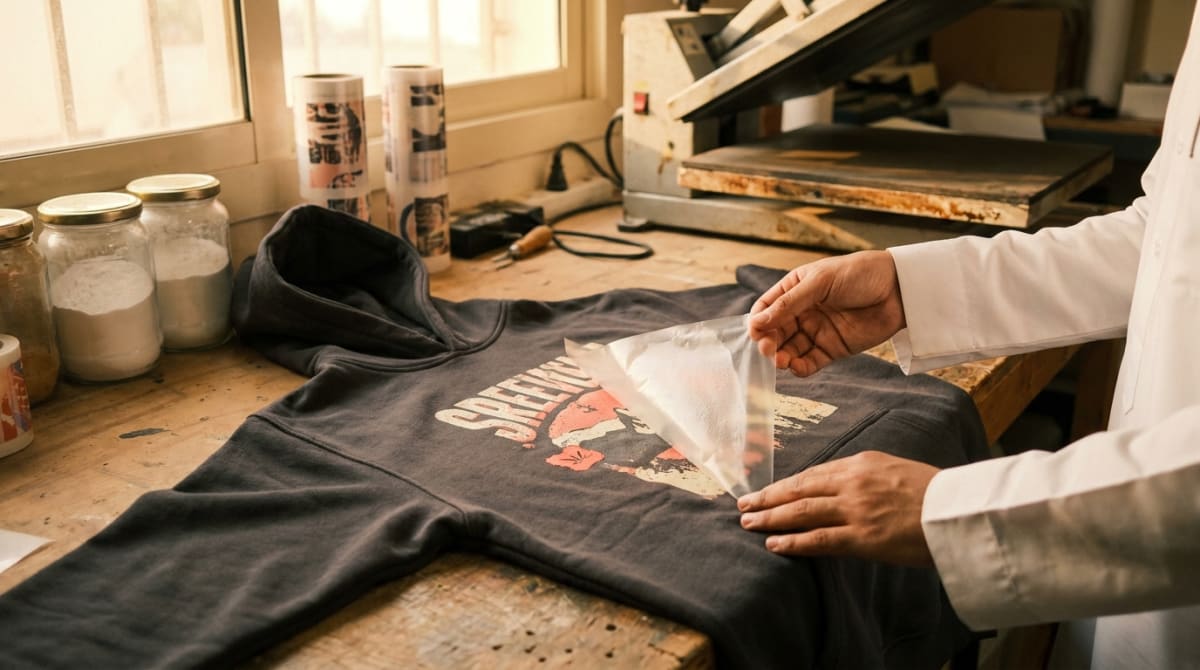
- The film is placed on the fabric and pressed under heat and pressure for a few seconds.
- The film is peeled away, leaving the design bonded to the fabric.
The result is a flexible print that stretches with the fabric instead of cracking quickly.
What makes DTF a strong choice
DTF's strength is its flexibility. It does not ask about your fabric type first the way some techniques do.
Works on any fabric and color
Cotton, polyester, blends, denim, even activewear. The white layer under the design makes it show clearly on black and dark colors, a point where some techniques struggle.
Sharp colors and high durability
Colors come out saturated with crisp edges, and gradients and fine detail hold well. Applied correctly, the layer survives dozens of washes with no noticeable cracking.
Ideal for small runs
No screens and no long setup, so printing a single piece is possible and worthwhile. That makes it one of the best fits for print on demand.
DTF vs DTG and screen printing
Each technique has its place. Here is a practical comparison to help you pick the right one for your product:
| Criterion | DTF (film) | DTG (direct) | Screen printing |
|---|---|---|---|
| Fabric type | Any, cotton, polyester, blends | Best on cotton | Most fabrics |
| Dark fabric | Excellent | Needs a base layer, slower | Excellent |
| Best quantity | Single piece to mid runs | Single to small runs | Large runs |
| Hand feel | Slightly felt layer | Soft, sinks into fabric | Depends on ink |
| Fine detail | Very good | The finest | Limited on gradients |
| Durability | High | Good | Very high |
In short: DTF has the widest coverage, DTG has the softest hand feel on cotton, and screen printing is cheapest at large volumes. We compare the two direct methods in more depth in DTF vs DTG and direct vs screen printing.
Where it fits for a Saudi seller
If you sell apparel with your own designs, you probably start with small quantities and many designs. This is where DTF shines: you can test ten designs on t-shirts and hoodies without ordering hundreds of pieces upfront. And when printing happens inside Saudi Arabia, the product reaches you faster, quality control is closer, and returns are easier if needed. Learn how to build a strong design in the t-shirt design guide, and find suitable products in best print-on-demand products and the custom hoodies guide.
Where Tamm fits
Tamm is the factory and the warehouse behind your store. You sell on Salla, Zid or Shopify, or any platform through the API; we print your designs on demand, store your stock, and pack and ship every order under your name from inside Saudi Arabia, then send the tracking number back to your store. Read about print on demand and storage and shipping.
The bottom line
DTF printing moves your design from film to fabric with heat, giving you sharp colors and high durability on almost any fabric and color, with no screens. It is wider than DTG across fabric types and cheaper than screen printing on small runs, which makes it a strong choice for an apparel seller starting with many designs and small quantities. Whichever method your design ends up needing, the distance it travels matters as much as the technique: a piece printed inside Saudi Arabia reaches your customer in days rather than weeks. See how the printing works.
Frequently asked questions
- What does DTF mean in printing?
- DTF stands for Direct to Film. The design is printed onto a clear film, coated with an adhesive powder that is set with heat, then pressed onto the fabric with a heat press.
- Does DTF printing work on all fabrics?
- Almost. DTF works on cotton, polyester, blends, and both dark and light fabrics. That range is its main advantage over DTG, which performs best on light cotton.
- Which is better, DTF or DTG?
- Neither wins outright. DTF is wider across fabric types and dark colors, while DTG gives a softer hand feel and finer detail on cotton. It depends on your product and quantity.
- Is DTF printing durable and wash-resistant?
- Yes. When applied correctly it survives dozens of wash cycles and resists cracking and fading, as long as you wash cold and turn the garment inside out.
- Is DTF good for small runs and print on demand?
- Yes. It is one of the best techniques for small runs and single pieces, because it needs no screens or setup, which suits the print-on-demand model well.