Print on demand
Print on Demand vs Local Manufacturing: Which Fits Your Store?
A practical comparison of print on demand and local bulk manufacturing across capital, MOQ, margin, quality, and lead time, and when each fits a Saudi seller.
Tamm Team5 min read
The core difference is simple: print on demand makes each item after it sells, with no inventory, no minimum quantity, and low capital, while local manufacturing means commissioning a factory to produce a large batch upfront, at a lower per-item price at volume in exchange for capital, a minimum order quantity, and a lead time. There is no absolutely better model, only the one that fits your stage: print on demand to start and test the market, local manufacturing to scale once demand proves out. This guide compares the two across six clear criteria, explains when each suits a Saudi seller, and shows how the hybrid path combines them.
The core difference in one line
Print on demand sells flexibility and safety with no financial commitment. Local manufacturing sells a lower per-item price and control over materials in exchange for capital and a quantity commitment. The decision is a trade between flexibility and volume savings.
A direct comparison across six criteria
The table sums up where each model wins. Read it row by row, because any single criterion may tip the balance differently depending on your situation and your store's stage.
| Criterion | Print on demand | Local bulk manufacturing |
|---|---|---|
| Capital | Low, no upfront buy | High, pay for the batch upfront |
| Minimum quantity | None, a single piece | High, tens to hundreds per design |
| Per-item price | Fixed and relatively higher | Drops sharply with volume |
| Risk | Low, made after the order | High, stock may sit |
| Lead time | Instant, upload and sell | Longer, sourcing and production |
| Quality control | Consistent if the printer is near | Samples and full material control |
When print on demand suits you
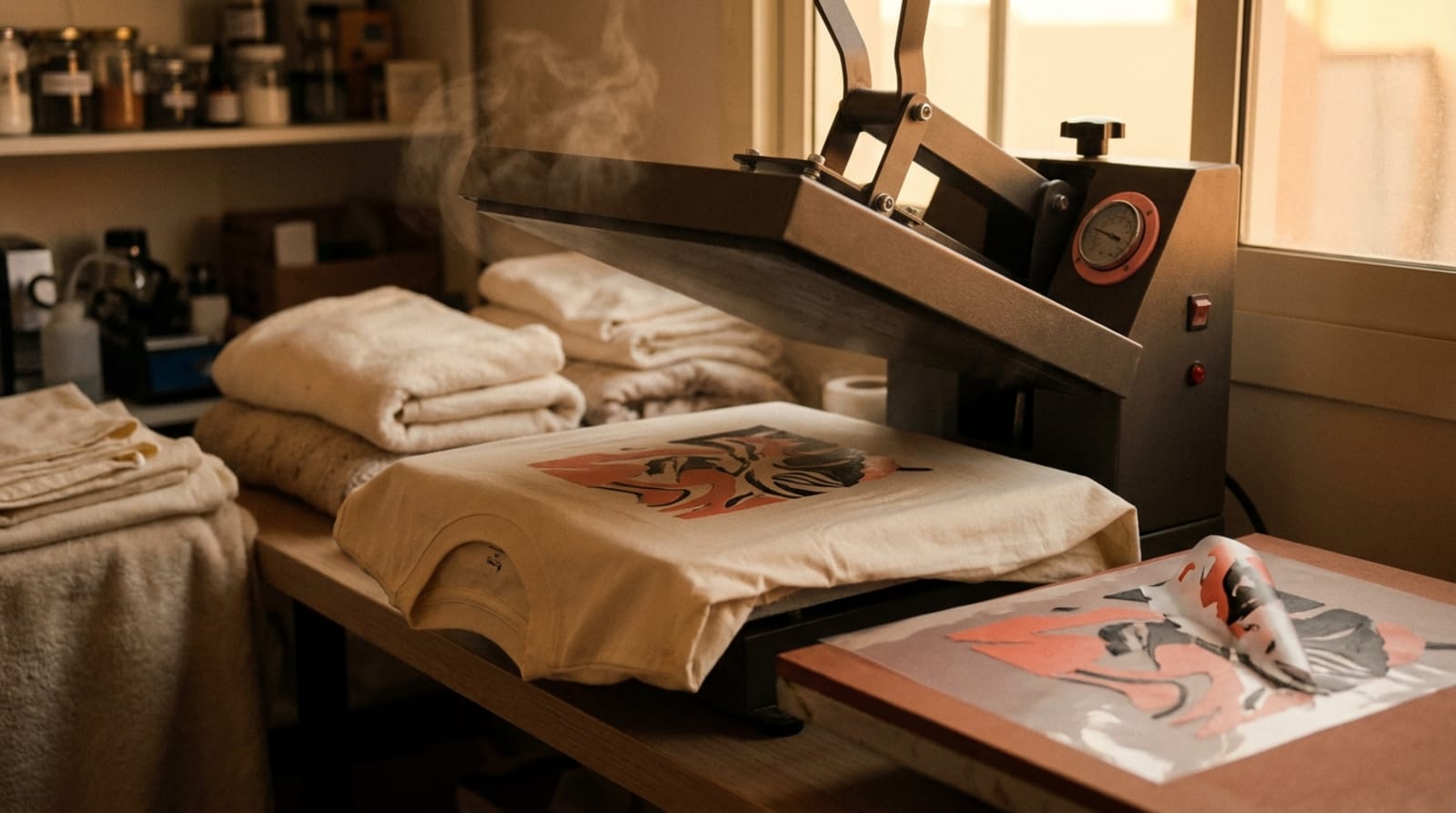
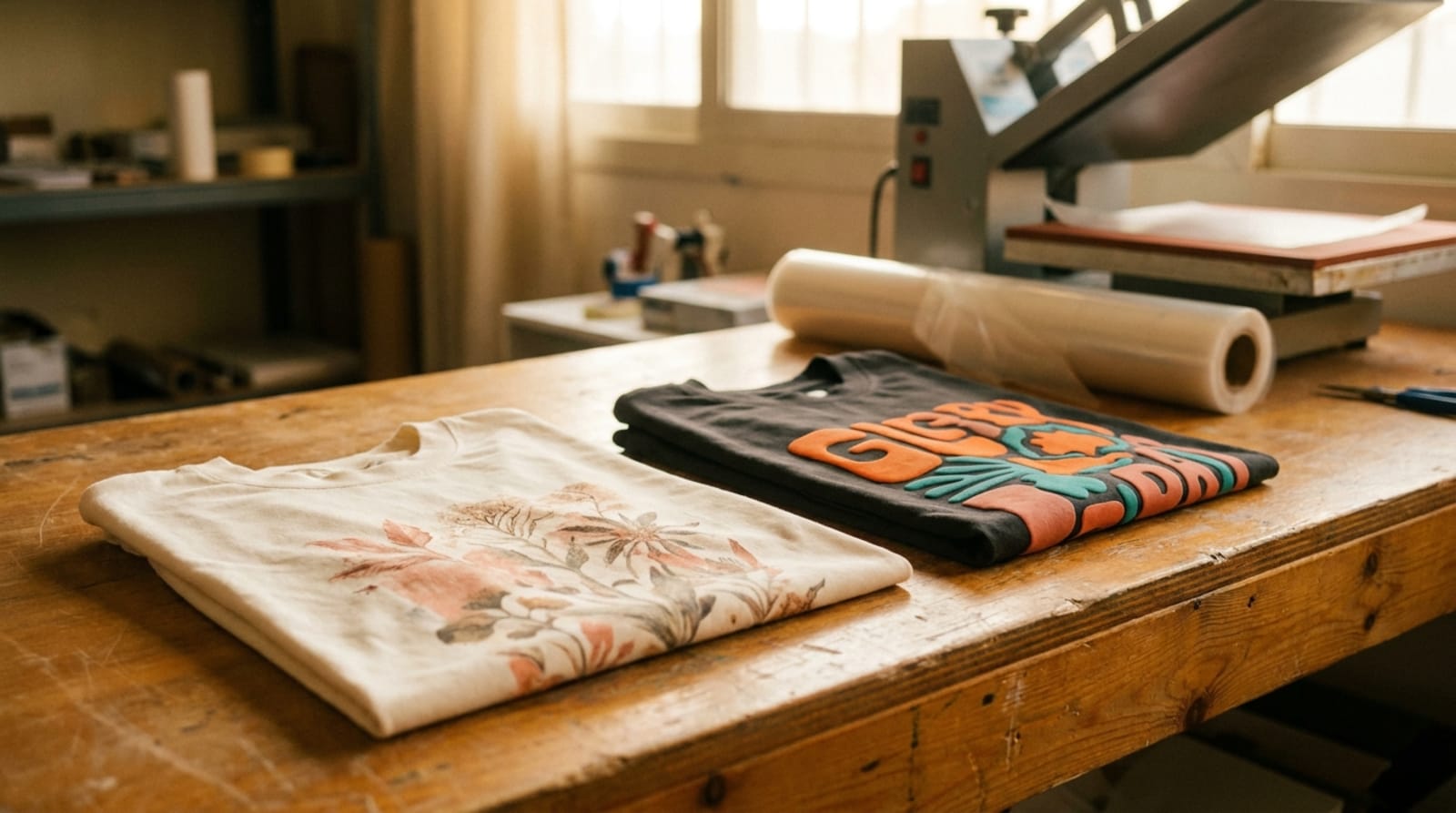
Choose it at the start, or whenever you launch many designs and want to test which sells before committing to any quantity. Each item is made after the order, so there is no dead stock and no frozen capital, and you add a new design in minutes with no upfront production cost. Its weakness is that the per-item price is higher than wholesale, so the margin on each sale is thinner. It is the model of experimentation and fast launches, ideal for content creators, emerging fashion brands, and stores probing the market. To go deeper, read what is print on demand, and for the numbers see print on demand profit margins.
When local manufacturing suits you
Choose it once a specific product proves steady, high demand and you want to cut the per-item cost and lift the margin. Buying in bulk lowers the cost sharply at volume, and gives you samples and control over fabric, fit, and detail before production. The price is that you pay for the batch upfront, commit to a minimum order quantity you may not fully sell, and carry the lead time and storage. Before committing, understand what MOQ is, the variable that sets your capital and risk in this model.
Local manufacturing vs importing
Many sellers weigh a local factory against importing from abroad. Importing can offer a lower per-item price, but it adds international shipping, customs, a longer arrival time, and quality risk that is hard to inspect remotely. Local manufacturing shortens the distance: faster samples, Arabic communication, and delivery inside Saudi Arabia without the complexity of importing. If you are weighing the overseas option, read importing from China to Saudi Arabia to balance cost against time and risk.
The hybrid path: often the smartest
You do not have to choose once and forever. The path the most successful stores take is simple: launch every design with print on demand at no risk, watch the sales, then manufacture in bulk only the designs that prove steady demand. That way you never freeze capital in untested stock, and you never miss the wholesale savings on your winners. Print on demand becomes your lab, and local manufacturing becomes your scaling line.
Where Tamm fits
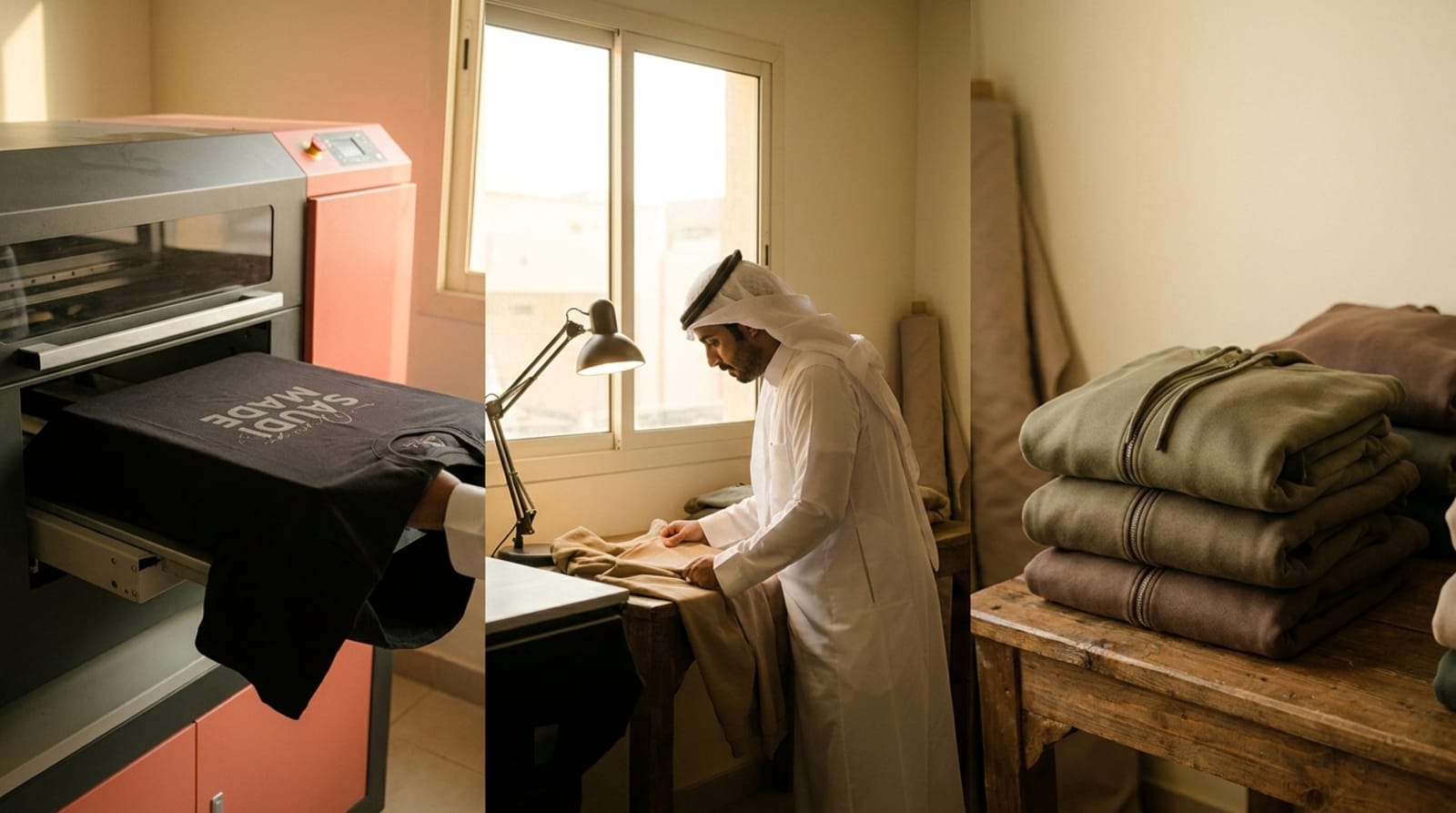
Tamm is the factory and the warehouse behind your store. You sell on Salla, Zid or Shopify, or any platform through the API; we print your designs on demand, store your stock, and pack and ship every order under your name from inside Saudi Arabia, then send the tracking number back to your store. Read about print on demand and storage and shipping.
The bottom line
The choice between print on demand and local manufacturing is not right versus wrong, it is matching the model to your stage. Print on demand starts with the least capital and risk and tests the market fast, but its per-item price is higher. Local manufacturing lowers the per-item price and gives you material control, in exchange for capital, a minimum quantity, and a lead time. The smartest move is often to combine them: test with print on demand, and manufacture in bulk what proves steady demand. Start with what your cash allows today, and evolve your model as the numbers prove out.
Frequently asked questions
- Which needs less capital?
- Print on demand needs far less. You buy no stock upfront and make each item after it sells. Local manufacturing means paying for a full batch in advance, usually above a minimum order quantity, before you sell a single unit.
- When does local manufacturing become cheaper?
- Once a specific product proves steady, high demand. At that point buying in bulk lowers the per-item cost enough to outweigh the tied-up capital and the risk of holding stock.
- What is the minimum order in manufacturing?
- It varies by factory and product, often from tens to hundreds of pieces per design, size, and color. Print on demand has no minimum, it makes a single piece when the order arrives.
- Can I combine both models?
- Yes, and it is often the smartest path. You test designs risk-free with print on demand, then manufacture in bulk only the ones that prove steady sales, getting the best of both.
- Which is better for quality control?
- Local manufacturing gives you samples and control over fabric and detail before a large run. Print on demand gives consistent quality when the printer is near and reliable, with no need to order a large batch just to inspect it.