Products
The Complete Guide to Selling Custom Hoodies: Weights, Fits, Print
A practical guide to selling custom hoodies: blank types and GSM weights, fits, print methods, pricing, and launching with print on demand and no upfront stock.
Tamm Team6 min read
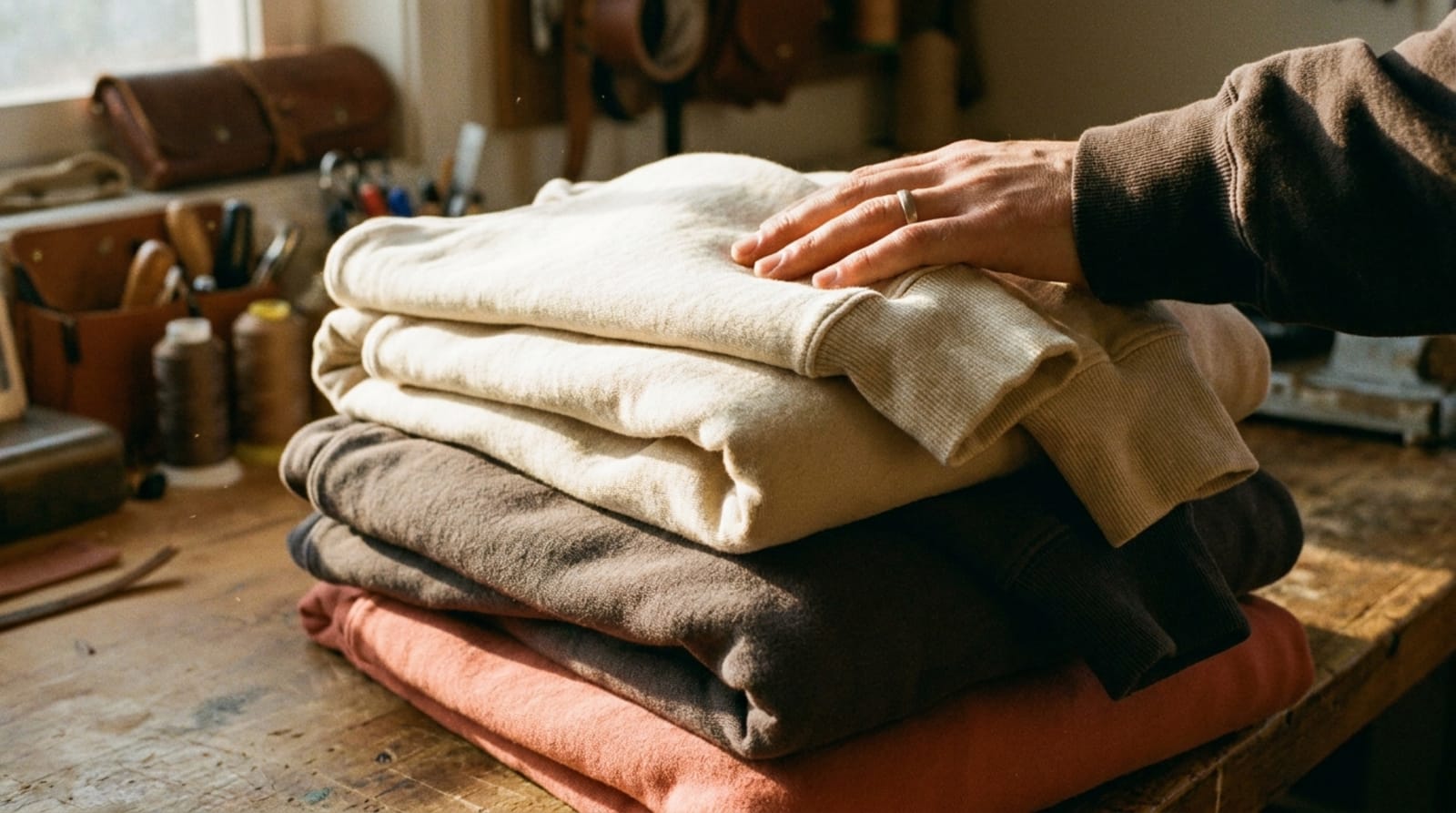
Custom hoodies are one of the strongest printed apparel products because they carry high perceived value, wide margins, and year-round wear. To sell them well, start by choosing a blank and a fabric weight (GSM) that fits your audience, pick a fit (regular, oversized, or boxy), match a print method to the thick fleece, price on real costs, and launch with print on demand so you never buy stock before you know what sells. This practical guide takes you from blank to launch: GSM weights and fits in a clear table, print methods that work on fleece, numbered launch steps, and an honest pricing base. The core idea is simple: you can build a full hoodie brand without tying up a single riyal in inventory that may never move.
Why hoodies are a top seller
A hoodie combines three advantages that rarely meet in one product. First, perceived value is high: buyers accept a bigger price for a heavy, warm piece, so the margin beats a tee. Second, it is an identity garment, something people wear to say who they are, which is exactly what builds loyalty in streetwear. Third, its large surface carries bolder designs across the chest, back, and sleeves. Add year-round air conditioning and the hoodie becomes both an indoor and outdoor layer. The result is a product that sells at a respectable price, expresses a brand, and prints across a wide canvas. That combination is hard for any seller to pass up.
Blank weights: a GSM table
Weight is measured in grams per square meter (GSM), and it is the first thing that separates your hoodie from a cheap one. Heavier feels more premium and holds shape better after washing, but it raises your cost, your price, and your shipping fee. Pick the weight that balances your audience's feel with your price.
| Weight class | GSM | Feel | Best for |
|---|---|---|---|
| Light | 240 to 280 | Light, flexible | Warm climate, inner layer |
| Mid | 280 to 320 | Balanced daily | Best seller, general brand |
| Heavy | 320 to 380 | Dense, premium | Elevated streetwear |
| Ultra heavy | 380 to 450+ | Solid, substantial | Limited premium drops |
Order a sample in two weights before you commit. The difference between 280 and 360 GSM is felt in the hand instantly, and it is often the difference between a hoodie that looks homemade and one that reads like a real brand.
Fits: regular, oversized, and boxy
Fit changes a hoodie's personality more than weight does. A regular fit sits close to the body with a balanced length, safe and flattering on most bodies. Oversized is wider and slightly longer with dropped shoulders, the look streetwear wants because it feels relaxed and current. Boxy is shorter and wider with a clear shoulder angle, bold and youthful and made for limited drops. Choose one fit that serves your brand identity instead of mixing all three. If you are building a streetwear label from scratch, read how to start a streetwear brand to tie the fit to your story and drops.
Fabric and print methods for hoodies
Most hoodies are cotton or a cotton-polyester blend with a smooth outer face and a warm fleece inside. Thick fabric forces you to choose your print method carefully, because what works on a tee does not always work on fleece.
- DTF heat transfer: Best for heavy hoodies. Sharp colors, good durability, works on cotton and blends, and handles large chest and back placements.
- Embroidery: A premium finish for small logos and names. It reads high-end but costs more and suits detail, not large graphics.
- Screen printing: Economical for large bulk runs in one or two colors, but a poor fit for testing many designs in small quantities.
- Direct DTG: Works on cotton but is harder on thick fleece and can fade on dark colors.
For a deeper comparison, read DTG vs screen printing.
Five steps to launch your hoodie with print on demand
- Choose the blank, weight, and fit. Pick a GSM and fit that serve your audience from the table above, and order a sample before committing to confirm the feel and sizing.
- Design for the large canvas. Use the chest, back, and sleeves, and prepare a file at 300 DPI with a transparent background. For the basics, see how to design a t-shirt that sells, since the same rules apply.
- Match the design to the print method. Large, multi-color art leans toward DTF, while a small premium logo leans toward embroidery. Design knowing what will print.
- Price on real costs. Add the printed item cost, packaging, shipping, payment fees, and marketing's share, then add a margin.
- Launch with no inventory. Publish the hoodie for sale, and each piece is printed after the customer orders and pays, so you test several designs and keep the winner with no loss.
How to price a hoodie for profit
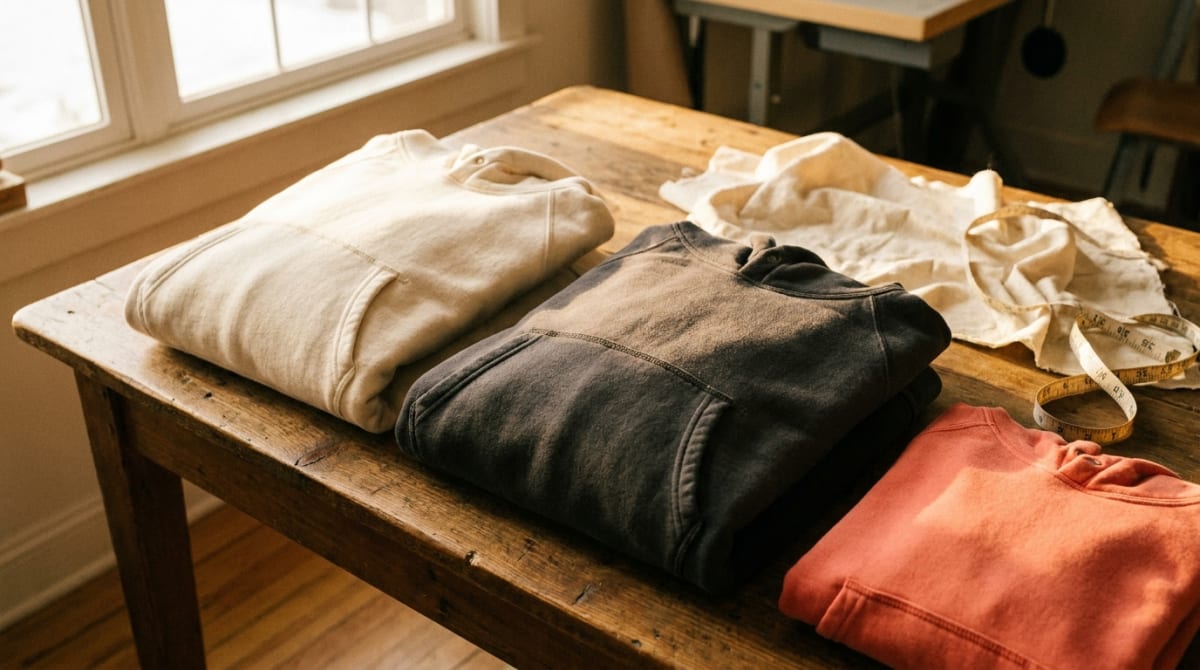
Price is not a guess. Add every cost that touches the piece: the printed hoodie, packaging, shipping, payment gateway fees, and each sale's share of your marketing budget. Then add a margin that lets you grow, not just break even. The advantage of print on demand is that your item cost is known in advance, so you calculate your margin precisely before you sell a thing. Do not price cheap to compete, because a hoodie audience pays for feel, story, and weight, not for the lowest price. The value you built into the blank and the design is what justifies your number.
Conclusion
Custom hoodies are a winning product because they carry high value, build identity, and print across a wide canvas. To sell them well, choose a fabric weight (GSM) and fit that serve your audience, match your design to a print method built for thick fleece, price on real costs rather than a guess, and launch with print on demand so you test your designs with no inventory and no risk. Start small with one sample and one weight, and let the market tell you which design deserves to scale. For the next step, start free with Tamm, and leave the storage and shipping to us while you focus on the brand.
Frequently asked questions
- What fabric weight is best for a hoodie?
- Weight is measured in grams per square meter (GSM). A light hoodie is around 280 GSM, mid weight is 300 to 320, and premium heavy is 350 to 450. Heavier feels more premium but costs more to make and ship.
- What is the difference between regular, oversized, and boxy fits?
- Regular sits close to the body with a balanced length. Oversized is wider and slightly longer with dropped shoulders for a relaxed look. Boxy is short and wide. Oversized and boxy are the streetwear favorites.
- What is the best print method for hoodies?
- DTF heat transfer is excellent on heavy hoodies and gives sharp colors, embroidery suits premium logos, and screen printing is economical for bulk. Direct DTG works on cotton but is harder on thick fleece.
- Should I print a batch of hoodies before I sell?
- No. Start with print on demand, so each piece is printed after the customer orders and pays. That way you test your designs with no inventory and no risk before any bulk order.
- How do I price a custom hoodie?
- Add up the printed item cost, packaging, shipping, payment gateway fees, and marketing's share, then add a margin that funds growth. With print on demand your item cost is known in advance, so you price precisely.