How Print on Demand Really Works: From Your Design to the Door
Follow one piece through print on demand: a design on a catalog piece, the order and payment, printing, checking and shipping under your brand, then the money.
Tamm Team7 min read
From the outside, print on demand looks simple: a design, an order, a parcel. But a seller who understands what happens between those steps makes better calls on design, pricing and customers. This guide follows one piece through Tamm, from the moment you put a design on it to the moment it reaches your customer's door. It explains where the money goes, how samples work, and what to check before you publish anything. If the whole idea is new to you, start with what print on demand is and come back.
You sell first, we make it after
Everything rests on one rule: a piece is only printed after your customer orders it and pays. There is no stock to buy, no minimum, and one piece is enough. That changes how you think about products. A new design does not cost you a production run, it costs you a product page. You can test an idea today, keep what sells and drop what does not, without a single box left over. The only price of that freedom is that one piece costs more to make than buying wholesale, which is why pricing with care is part of the job, not a detail.
Where Tamm fits
Tamm is an AI-first e-commerce platform with its own factories, warehouses and supply chain in Saudi Arabia behind it: you describe the store you want and the agent builds it, we print your pieces on demand, and we store your own products and ship every order under your brand. How print on demand works
The factory here is not a distant party you email. The order goes from your Tamm store straight to the print line, and we handle more than 120,000 orders a month and ship to 166 cities. What stays with you is what makes a brand: the idea, the design, the price, and your relationship with your customers.
Step one: your design on a catalog piece
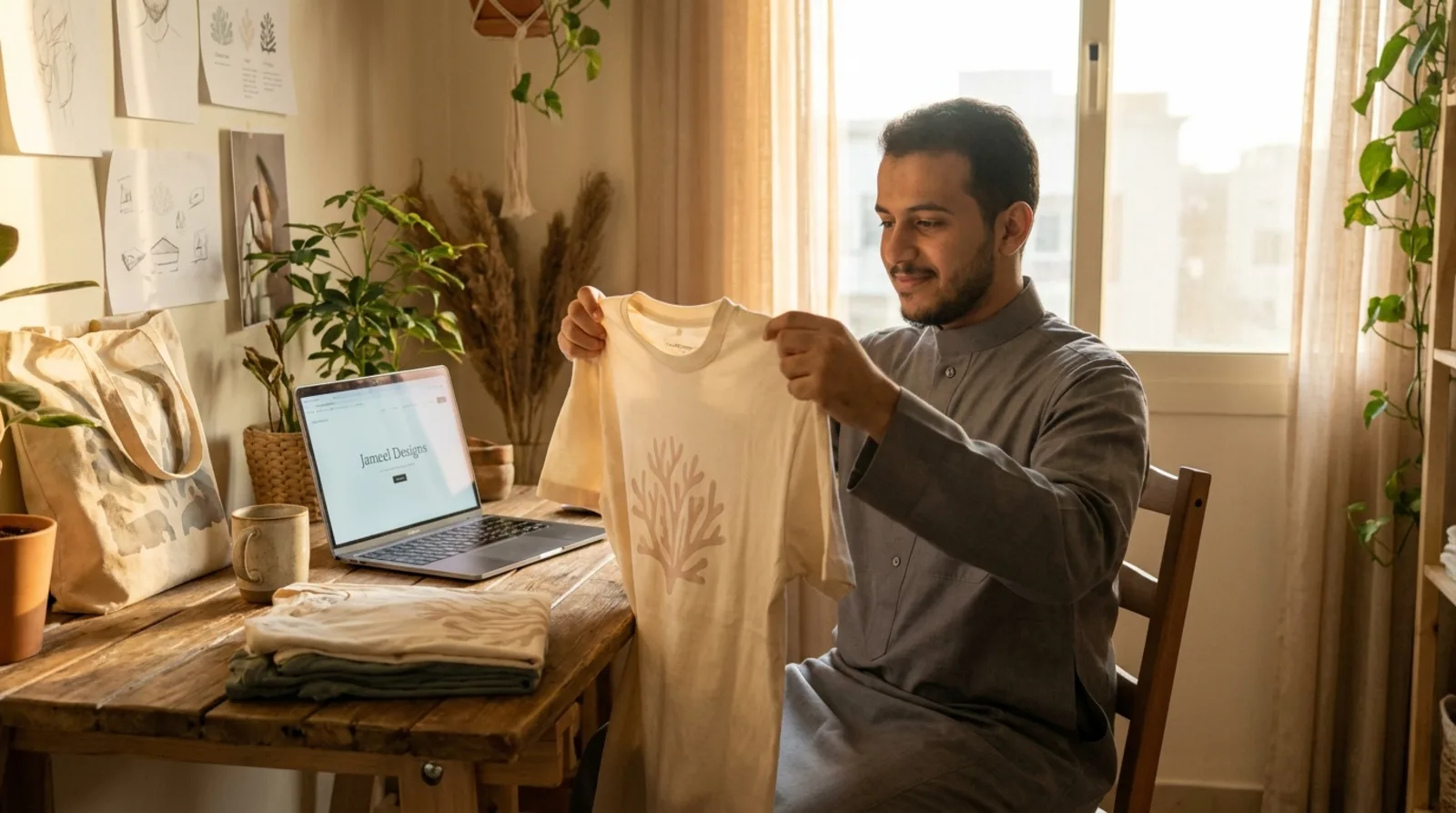
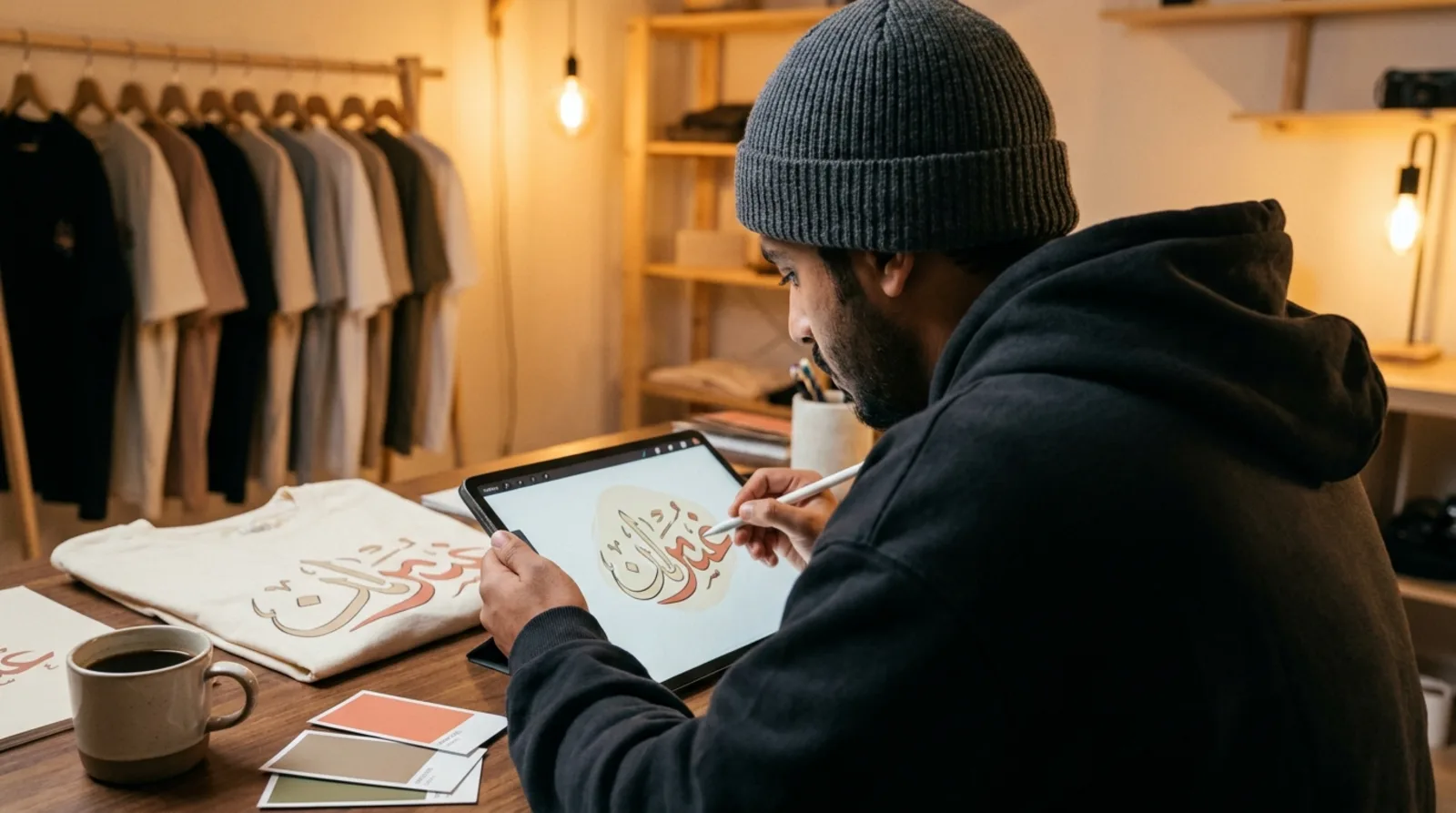
You start in the catalog: tees in oversized, boxy and regular cuts, light and heavy, plus hoodies, sweatshirts, caps, mugs, posters, stickers and more. You pick the piece, put your design on it in the editor, and see how it looks before you publish. You make three decisions here:
- Where the design sits and how big it is. Every piece has set print areas, and anything outside them does not print. What we do not print today is listed in what print on demand will not do, so check it before you build a design around an area that is not there.
- The piece colours. Offer the colours your design reads well on, not every colour available. A dark design on a black piece disappears, however good it looks on screen.
- The price. You see the cost of every piece in your dashboard before you publish, and you set your own price on top.
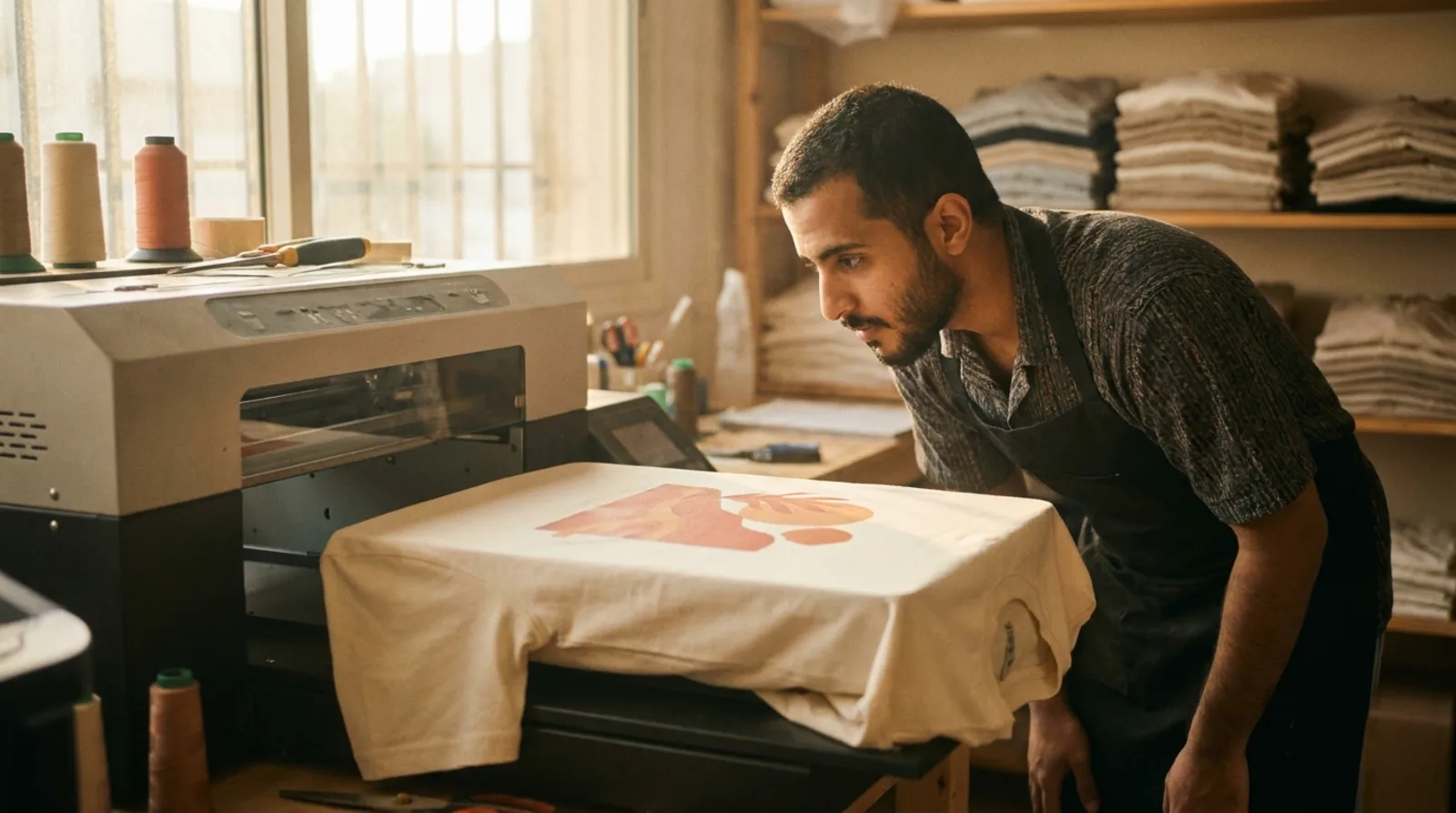
Our garments are printed with DTG, direct to garment, where the ink goes straight onto the fabric. The result depends on your file first: a file with a transparent background and enough resolution for its print size comes out clean, while a small file stretched up comes out soft with jagged edges. We cover file preparation in detail in AI print files and product photos.
From the customer's order to the print line
The piece shows in your store at your price. Your customer orders and pays like in any store: with mada, a card, Apple Pay or in instalments. Tamm issues the invoice for every storefront order, so you do not prepare it yourself; it is a tax invoice once your ZATCA account is connected with VAT collection on.
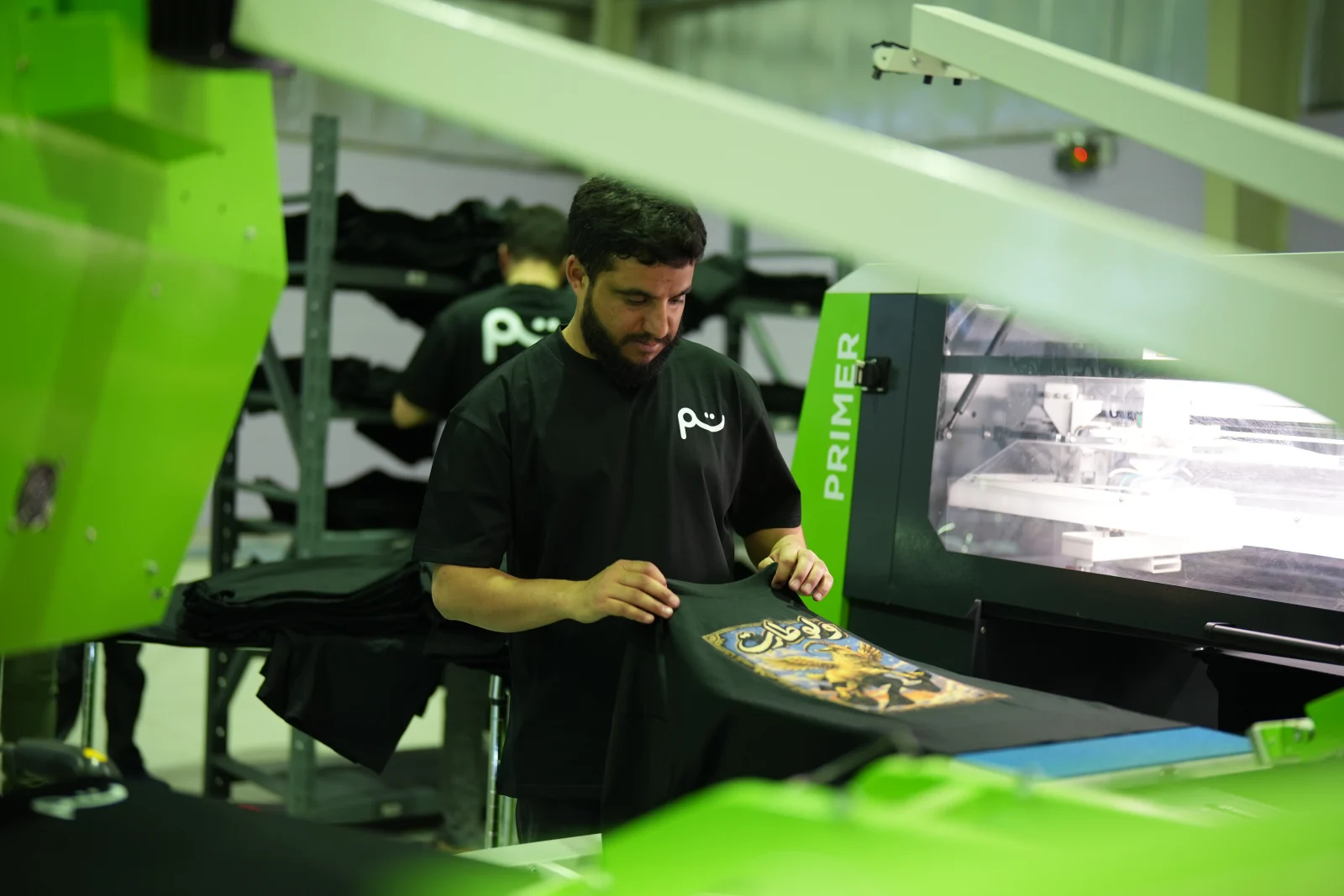
Once it is paid, the order reaches us on its own. You do not forward it, send a file or write a message. We print exactly the piece your customer ordered, in the size, colour and design they chose, and check it before packing. That check is the last stop before a piece leaves in your name.
Packed and shipped under your brand
After the check we pack the piece and ship it to your customer from inside Saudi Arabia. Clothes go into a clear matte bag and then a shipping bag, and other products go in plain packing. The Tamm name is not on the box or the piece, so your customer only sees your brand. Bags with your logo, custom tags and thank-you cards are coming soon; they are not available today.
If you also have products you made yourself, you can send them to a Tamm warehouse. We store them and ship them on their own or in one box with your printed pieces. Or you ship them yourself when the order reaches your dashboard.
Returns stay your call: you open every return, and it goes to an address you pick from your own store locations.
The money: what is yours and what is on you
The sum has three steps:
- Your customer pays your price.
- Off it come the cost of the piece and shipping, the payment fee (card, mada or Tamara), the warehouse fee if we ship your own stock, the bank transfer fee, and VAT on our fees. A return also costs its shipping.
- What is left is your profit, and the monthly invoice in your dashboard shows every deduction line by line.
In words: you publish a tee with your design, a customer orders it and pays your price. The cost of the piece, packing, shipping and the fees comes off that amount, and the rest goes to your balance. If no order comes, you have paid nothing. The shipping cost is clear in your dashboard, and you decide what your customer pays for shipping in your store.
Every profit is recorded in your dashboard. Earnings from shipped orders go to your bank account every Sunday, once they reach SAR 100 and your payout details are complete: your IBAN, and your commercial registration or freelance certificate. You start on a free membership and only move to a paid one when you need more, and the details are on the pricing page.
The most common mistake here is setting a price before knowing the cost. Work out your margin before you publish, and set part of it aside for marketing; what is left after that is your real profit. We walk through the numbers in print on demand profit margins.
A sample travels like a customer order
You can order samples of your own design, and a sample reaches you exactly as it would reach your customer: the same packing, the same time, the same quality. Our team does not know it is a sample, so it moves like any order. That makes it the most honest test you have: what reaches you is what will reach your customer.
Use it to feel the fabric in your hand, check the size and how the piece wears, and compare versions of your design, because a printed design looks different from the screen. Some sellers order a larger quantity to use at an event or sell somewhere else. A mockup shows you the look, a sample shows you the truth, and the difference is explained in mockups vs samples.
Before you publish: five checks
Before you hit publish on any product, run through this list:
- The file. A transparent background unless the background is part of the design, and enough resolution for the size it will print at.
- The placement. The design sits inside the print area, at a size that works on the piece in every size.
- The colour. You tried the design on every colour you will offer, and dropped the ones it gets lost on.
- The price. You know the cost of the piece and shipping, and your margin after marketing is clear.
- The sample. You ordered at least one sample of the design you are betting on.
These five checks are your share of the work, and they are what separates a brand customers trust from a store full of returns. Printing, checking, packing, shipping and the Sunday payout then run on their own after every order. If you want to see the steps as they run inside the factory, they are laid out on how print on demand works.
Frequently asked questions
- Do I pay anything before an order comes in?
- No. A piece is only printed after your customer orders it and pays your price. The cost of the piece, shipping, the payment fee and VAT on our fees then come off that amount, and the rest is yours. If no order comes, you have paid nothing.
- When do I get paid?
- Every profit is recorded in your dashboard. Earnings from shipped orders are paid to your bank account every Sunday, once they reach SAR 100 and your payout details are complete: your IBAN, and your commercial registration or freelance certificate.
- Does the Tamm name appear on the box or the piece?
- No. Our name is not on the box or the piece, and your customer only sees your brand. Packaging with your own logo is coming soon.
- Is a sample handled differently from a customer order?
- No. A sample moves like any customer order: the same packing, the same time, the same quality, and our team does not know it is a sample. What reaches you is what will reach your customer.