Products
The Complete Guide to Selling Custom Phone Cases: Types, Print, Launch
A practical guide to selling custom phone cases: case types (tough, silicone, clear, slim), UV and sublimation printing, device model coverage, safe zones, and launching with print on demand.
Tamm Team7 min read
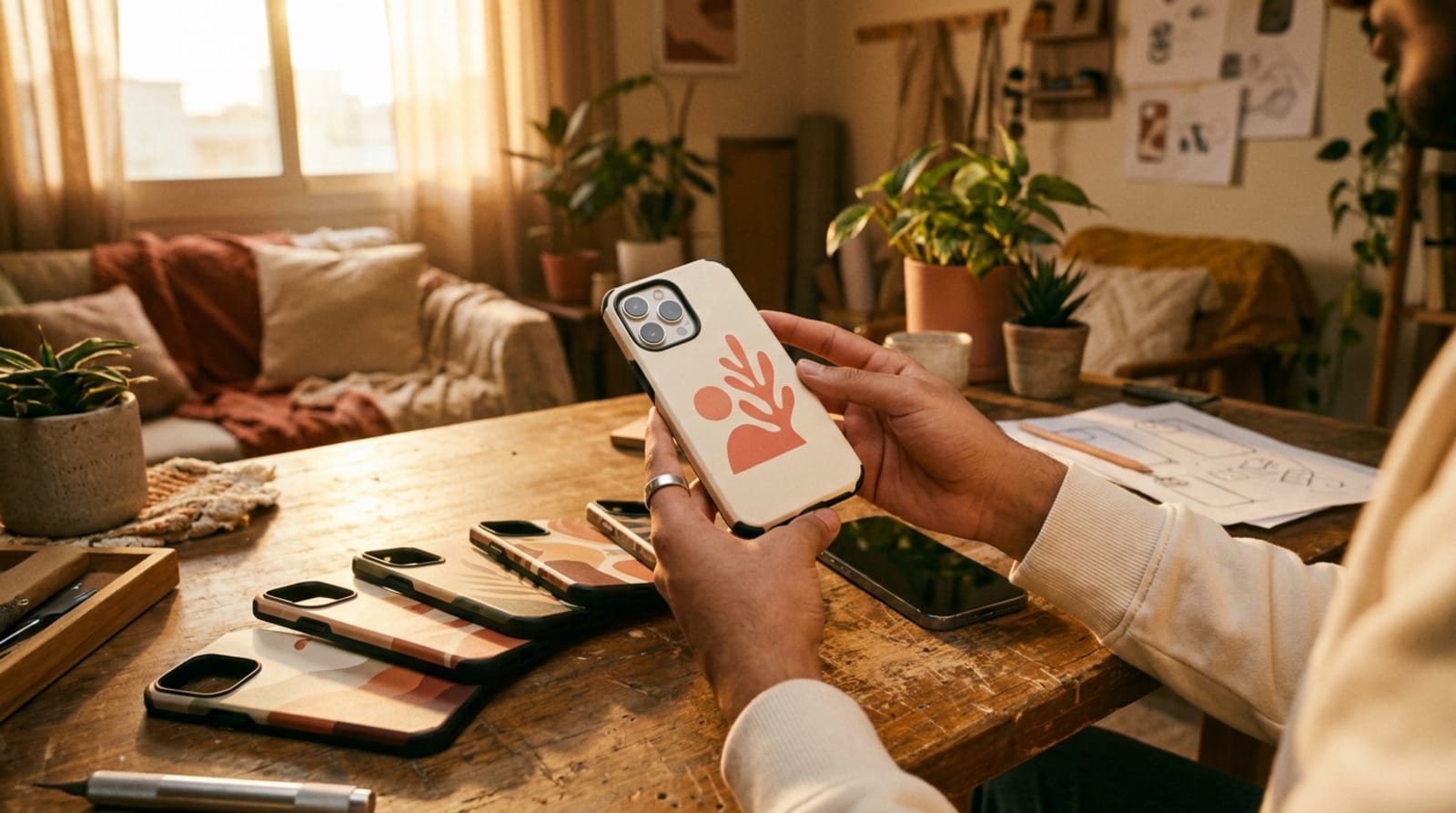
Custom phone cases are one of the smartest and lowest-risk print on demand products: low cost, small enough that shipping is cheap, and in constant demand because people swap their case far more often than their phone. To sell them well, start by choosing the right type (tough, silicone, clear, or slim), understand the correct print method between UV and sublimation, handle the huge number of device models by not chasing all of them, design inside a safe zone with correct bleed around the camera and edges, and launch with print on demand so you never buy stock before you know what sells. This guide takes you from type to launch: a clear table of types, a plain-language look at print methods, a practical fix for the model problem, design and safe-zone rules, and an honest pricing base. The core idea is simple: you can build a full case brand without tying up a single riyal in inventory that may never move.
Why phone cases are a low-risk product
A case combines advantages that rarely meet in one product. Its base cost is low, so your margin stays comfortable at a reasonable price. It is small and light, so it ships cheaper than apparel or mugs and needs no complex packaging. Demand is always renewing, because people change a case to refresh the look or after a scratch, which happens far faster than replacing the phone itself. Add that it is an identity product: fans, teams, and brands buy it because it is seen in the owner's hand all day. The result is a product that is cheap to make, easy to ship, in constant demand, and fits individuals and larger orders alike. To widen your product line after cases, see the best print on demand products.
Phone case types
A smart choice starts with knowing which type serves your audience, because each has a different protection level, look, and price. The tough dual-layer case combines a hard outer shell with a shock-absorbing inner layer for high protection. Silicone is soft and comfortable in hand with a simple look. Clear shows off the device's original color and suits light designs. Slim is thin and hugs the body for people who want the minimum.
| Type | Description | Protection | Best for |
|---|---|---|---|
| Tough dual-layer | Hard shell plus shock-absorbing layer | High | Maximum protection, heavy daily use |
| Silicone | Soft, flexible, comfortable in hand | Medium | Simple look, soft touch |
| Clear | Transparent plastic that shows the device | Medium | Showing device color, light designs |
| Slim | Thin hard case that hugs the body | Light | Least bulk and weight, sleek look |
Start with one or two types that serve your audience rather than listing every type at once, and let demand tell you which one deserves to scale.
Print methods: UV and sublimation
The print method decides how your design looks and where it applies. Two methods dominate phone cases, each with its place.
UV printing
UV printing lays ink directly on the case surface, then cures it instantly with ultraviolet light, so the ink sets with sharp colors and fine detail on hard and clear surfaces. It suits tough, slim, and clear cases, and gives a slightly raised texture you can feel.
Sublimation printing
Sublimation turns ink into vapor with heat so it fuses into a special polymer coating and becomes part of the surface, not a layer on top. It gives full edge-to-edge coverage and vivid colors that do not peel, but it needs a case coated with polymer for it.
Sublimation needs a light, polymer-coated surface to work, while UV printing works directly on hard and clear surfaces. Choose the case based on the print method you want, not the other way around.
The device model problem
The hardest part of phone cases is not the design but the sheer number of device models, since each differs in size and camera-cutout position. The common mistake is trying to cover every device on the market, which drains your effort and clutters your store. The fix is to start only with the most popular devices among your audience, then expand gradually by real demand. With print on demand, the requested model version is printed after the customer orders, so you can list dozens of models without stocking a single unit. Prepare your design as a flexible template that adapts to each model's camera cutout, so you design once and sell across many devices. To understand the model that makes this possible, see what print on demand is.
Design: bleed and safe zones
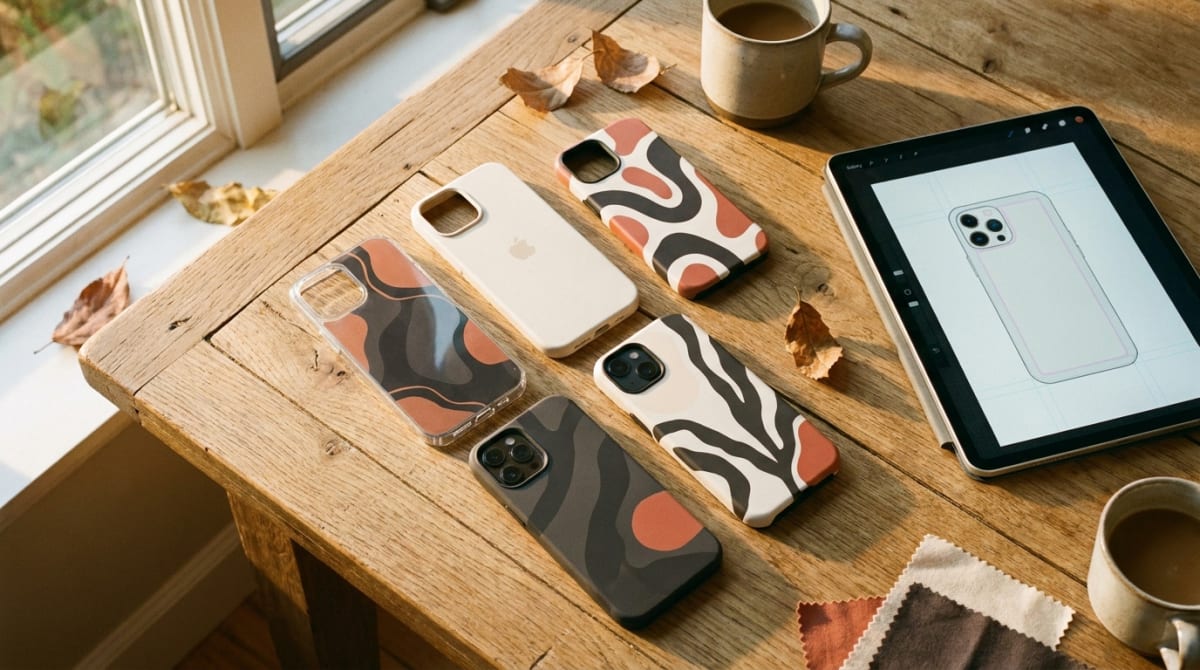
A case is a small surface with wrapping edges and a camera cutout, which forces precise design rules. Prepare your file at 300 DPI so edges stay sharp. Leave a bleed that extends slightly past the case edge, because a design that stops exactly at the edge leaves white lines on any small shift, and bleed prevents that. Keep text, logos, and key elements inside the safe zone, away from the edges and the camera cutout, so nothing gets clipped. The same file-prep rules that govern apparel apply here, so see how to design a t-shirt that sells for the basics of resolution and transparent backgrounds. Try one design that fills the whole case and one centered, and test which sells.
Five steps to launch your case with print on demand
- Choose the type. Pick one or two types from the table above that serve your audience, and start with tough or clear in most cases, since they are the most requested.
- Match the design to the print method. UV for hard and clear surfaces, sublimation for polymer-coated cases with full coverage. Choose the case based on the print you want.
- Design with safe edges. Prepare a 300 DPI file, add bleed past the edge, and keep key elements inside the safe zone away from the camera.
- Start with the most popular models. Cover the top devices among your audience first, and expand the list by real demand with no stocking.
- Launch with no inventory. Publish the case for sale, and each one is printed after the customer orders and pays, so you test several designs and keep the winner with no loss.
How to price a custom phone case
Price is not a guess. Add every cost that touches the case: the printed case, packaging, the relatively cheap shipping thanks to its small size, payment gateway fees, and each sale's share of your marketing budget. Then add a margin that lets you grow, not just break even. The advantage of print on demand is that your item cost is known in advance, so you calculate your margin precisely before you sell a thing. And because a case is small, its shipping cost stays low, which widens your margin compared with larger products. The value you built into the design and quality is what justifies your number, not the lowest price on the market. To go deeper on margins, see print on demand profit margins.
Conclusion
Custom phone cases are a low-risk product because they are cheap to make, small and easy to ship, and in constant demand since people swap cases more often than phones. To sell them well, choose the type that serves your audience, match the print method (UV or sublimation) to the case, handle the many models by starting with the most popular and expanding by demand, design with bleed and a safe zone around the camera and edges, price on real costs, and launch with print on demand so you test your designs with no inventory and no risk. Start small with one type and a few models, and let the market tell you which design deserves to scale. For the next step, start free with Tamm, and leave the storage and shipping to us while you focus on the brand. And if you are building an audience around your content, see selling merch for content creators.
Frequently asked questions
- What types of custom phone cases are there?
- The four most common are the tough dual-layer case for high protection, the soft silicone case that feels good in hand, the clear case that shows the device color, and the slim case that hugs the body. Each has a different look, protection level, and price.
- Which print method is best for phone cases?
- UV printing prints directly on the case surface with ink cured by ultraviolet light and gives sharp colors on hard and clear surfaces. Sublimation suits polymer-coated cases and wraps the design fully to the edges.
- How do I handle the huge number of device models?
- Do not try to cover every model. Start with the most popular devices among your audience, and use one design template that adapts to each model's camera cutout through print on demand, so you add models with no inventory.
- What is the safe zone on a phone case?
- The safe zone is the area where your full design shows, away from the edges and the camera cutout. Leave a bleed that extends past the edge to avoid white lines, and keep text and key elements inside the safe zone.
- Why are phone cases a low-risk product?
- They are cheap to make, small so shipping is cheap, and in constant demand because people swap cases more often than phones. With print on demand each case is printed after it sells, so you test designs with no inventory and no risk.