Saudi market
Saudi E-commerce Market Overview: A Starter's Guide
A full overview of the Saudi e-commerce market: buyer behavior, mada and cash on delivery, popular categories, logistics, VAT and registration basics, and opportunities.

The Saudi e-commerce market is a promising place to start today, combining very high smartphone penetration, a young population used to shopping online, and a clear government push toward digital under Vision 2030. The Saudi buyer usually starts on a phone, likes to pay with mada or Apple Pay, and many still prefer cash on delivery on a first order. Popular categories run from fashion and beauty to electronics and locally made print-on-demand brands. This overview explains what makes the market attractive, how the buyer behaves, which categories are growing, the reality of logistics and fulfillment, the high-level basics of VAT and commercial registration, and where the opportunities are for anyone entering now.
What makes the Saudi market attractive
Three factors intersect to create a favorable environment for selling online. First, smartphone usage is among the highest in the region, so you reach the buyer directly in their pocket. Second, the population is largely young, a segment quick to adopt digital shopping and electronic payment. Third, there is an organized government push toward digital under Vision 2030, matched by clear growth in local platforms, payment gateways, and shipping solutions. Government and industry reports generally point to an upward trend in e-commerce volume, though we will not cite a specific figure here because the numbers change. What matters is that the direction is clear and the channels are mature enough to start with.
How the Saudi buyer behaves
Understanding buyer behavior comes before choosing a product or a platform. Rule one: the journey starts on mobile.
Mobile first
Most visits and orders come from a phone. Your store must be fast, light, and easy to browse with one thumb, with a short, clear checkout. Any slowness or friction in the cart costs you sales directly.
Payment: mada, Apple Pay, and cash on delivery
mada is the most widely used method locally, Apple Pay is strongly present, and credit cards are accepted. But cash on delivery remains a preferred option for a large segment, especially on a first order with a store they do not know. Offer all three together, and do not force the buyer into a single method.
Arabic content and trust
A store that speaks to the buyer in correct right-to-left Arabic, with real photos and clear descriptions, earns trust faster. Trust is built in details: a clear return policy, shipment tracking, and support that replies quickly and in Arabic.
Popular categories
Demand spreads across several categories, the most notable being:
- Fashion and accessories: from everyday clothing to local brands and print-on-demand streetwear.
- Beauty and personal care: a large, repeat-purchase category driven by content and recommendations.
- Electronics and accessories: steady demand with high sensitivity to price and warranty.
- Home and living: tools, decor, and gifts.
- Creator and brand products: tied to a ready audience and well suited to print on demand.
Demand rises clearly in seasons like Ramadan, the two Eids, back to school, and White Friday. Plan your inventory and operational capacity before the season, not during it.
The reality of logistics and fulfillment
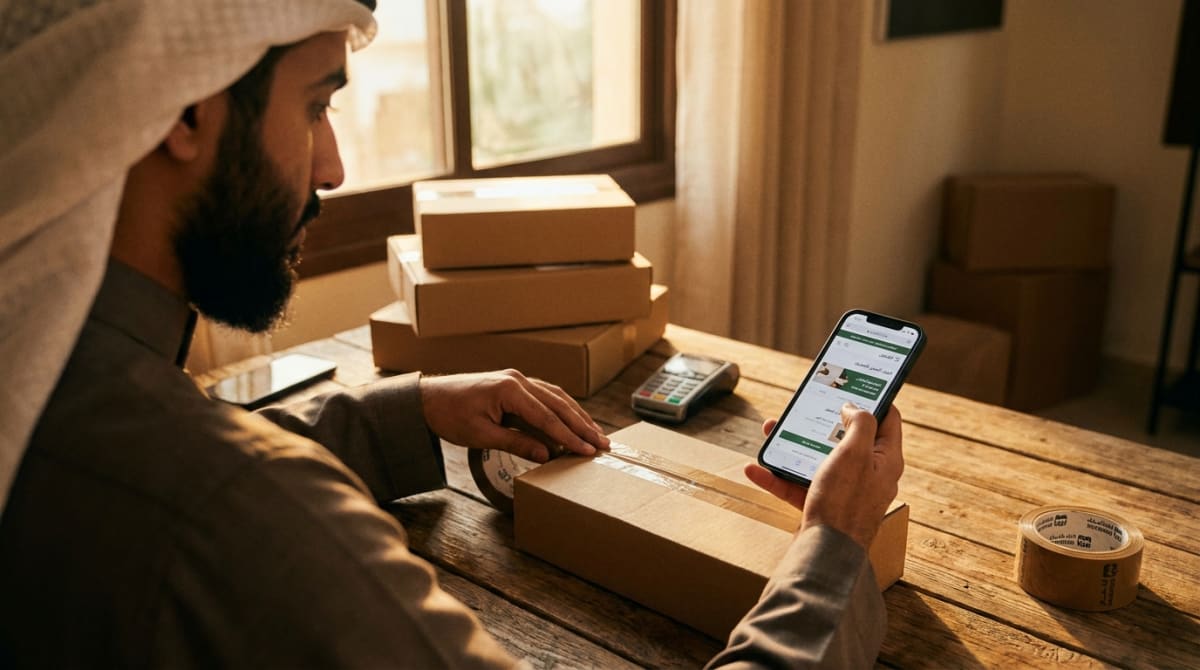
Selling is half the story, and the other half is getting the product to arrive fast and in good condition. Saudi Arabia has a mature local shipping network and cross-border options, but the real challenge is fulfillment: storage, picking, packing, and on-time delivery. You have three common models:
- Self-shipping: you store, pack, and ship yourself. Fine for a small start, but it eats your time.
- Print on demand: no inventory, the product is printed and shipped per order. Great for brands and creators. Read what print on demand is.
- Storage and shipping via an integrated partner: you hand your stock to a party that stores, picks, packs, and ships for you, freeing you to sell and market.
The fewer parties between your store and your customer, the fewer errors and delays. This is where an operations platform that combines selling, printing, storage, and shipping inside Saudi Arabia shows its value.
Regulatory basics at a high level
The regulatory side is simpler than it looks when you start with the basics. You typically need a commercial registration that documents your activity, VAT registration once you reach the required threshold, and e-invoices compliant with the Zakat, Tax and Customs Authority. A good platform issues VAT invoices automatically and records your sales, saving you the pain of manual tracking.
This article is general, educational information, not legal or tax advice. Registration thresholds, exemptions, e-invoicing requirements, deadlines, and fees change over time. Always verify the current rules directly with official sources such as the Zakat, Tax and Customs Authority (ZATCA) and government business portals, or consult a licensed professional, before you register your business or file a return.
Where the opportunities are for a new entrant
The market is mature but not complete, which leaves room for newcomers. Local brands with a clear identity earn loyalty that a generic importer struggles to match. Specialized products that serve a precise segment outperform the broad and generic. Creators who already own an audience can turn it into a store quickly through print on demand. Low-risk models like dropshipping and print on demand lower the barrier to entry, so you test the market without heavy capital or piled-up inventory.
Your practical next step
Start by defining the category and segment you serve, then choose the lightest operating model that fits your product, then open your store on a platform that supports mada, cash on delivery, Arabic, and VAT invoicing. For the step-by-step, see how to open an online store in Saudi Arabia and how to choose the best e-commerce platform. Do not wait for perfect, start small, measure, and improve with every order.
The bottom line
The Saudi e-commerce market is attractive for anyone who enters with understanding: high smartphone penetration, a young audience, and a government push toward digital. The buyer starts on mobile, likes mada and Apple Pay, and values cash on delivery, Arabic content, and trust. Popular categories are many, logistics are mature, and the regulatory basics are simple when you start correctly. The biggest opportunity belongs to those who pick a clear segment, a low-risk model, and a platform that reduces the parties between them and their customer. Start today, and build step by step.
Frequently asked questions
- Why is the Saudi e-commerce market attractive for new sellers?
- It combines very high smartphone penetration, a young population comfortable with online shopping, and a strong government push toward digital under Vision 2030. Together these create steady demand and clear channels to reach buyers.
- What are the most popular payment methods in Saudi stores?
- mada is the most widely used locally, followed by Apple Pay and credit cards. Cash on delivery remains an important option that many buyers prefer, especially on a first order with a store they do not know yet.
- Which categories are popular in Saudi e-commerce?
- Fashion and accessories, beauty and personal care, electronics, and home goods, plus creator brands and locally made print-on-demand products. Demand rises sharply in seasons like Ramadan and Eid.
- What regulatory basics do I need to start a store in Saudi Arabia?
- You typically need a commercial registration, VAT registration once you reach the required threshold, and e-invoices compliant with the Zakat, Tax and Customs Authority. This is general information, so verify current details with official sources.
- Do I need my own warehouse to start?
- No. You can start with ready-made products, with print on demand and no inventory, or by using a partner that stores and ships for you. Begin with the lightest model that fits your product, then scale with demand.